
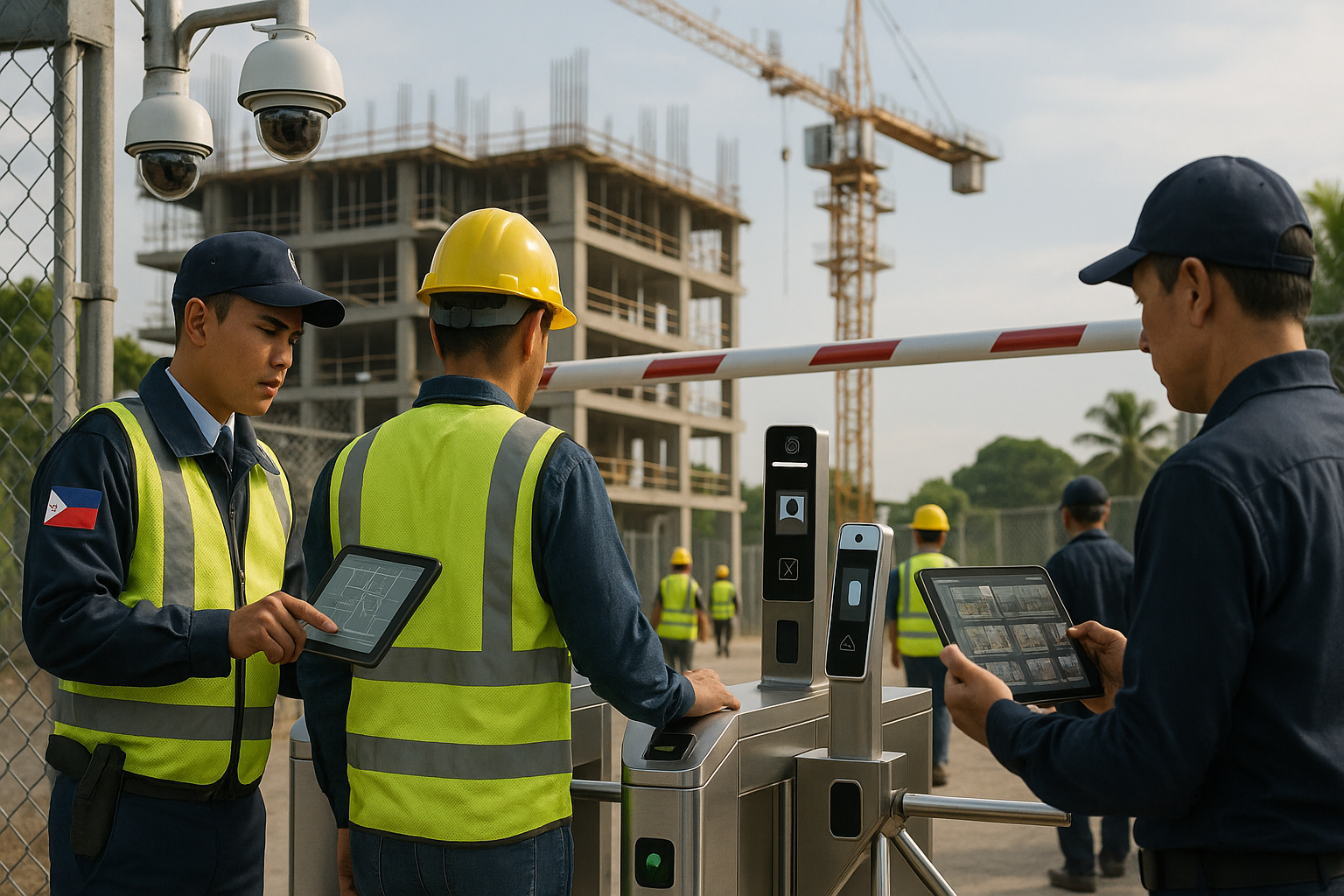
Opening a construction site brings momentum, but the first week of work is when most losses happen. Heavy equipment disappears overnight, deliveries go missing, and unauthorized people wander through half-built floors. For developers and contractors in the Philippines, these losses mean schedule slippage, steep replacement costs, and higher insurance premiums. Strong, practical site security changes that outcome.
Site security Philippines has to answer a specific set of realities: fast-moving projects, often remote or partially finished works, dense urban neighborhoods, a rainy climate that creates easy concealment, and legal and insurance obligations that penalize carelessness. This guide explains what matters most, why those elements matter, and how to build a layered security program that fits projects of different sizes. Read on for concrete steps you can use on the next job, along with ways to reduce cost while improving protection.
Why site security matters for construction projects in the Philippines
Construction sites are temporary, attractive targets. Machines sit idle at night, branded tools are easy to resell, and loose materials such as steel rebar or copper wiring are high-value and low-effort to take. Beyond theft, unauthorised access puts lives at risk. A trespasser falls through an opening, or a local youth lights a fire to keep warm. Those events generate legal exposure, project delays, and reputational damage that can cost far more than the value of stolen material.
Local context intensifies these risks. Dense metropolitan projects face opportunistic theft and vandalism. Rural or road projects may sit in areas with less regular patrol and longer response times from law enforcement. Typhoons and floods create windows where security is harder to maintain. At the same time, insurers and project owners expect documented controls. Without clear procedures and records, claims can be denied or reduced.
Common threats and vulnerabilities at Philippine construction sites
The most frequent losses and incidents have patterns that you can anticipate.
- Theft of heavy equipment and tools happens when machinery is left unlocked or keys are not controlled. Mobile equipment such as excavators and generators can be driven off site.
- Scrap metal theft targets rebar, copper pipes, and wiring. Opportunists cut and remove material from exposed areas during off hours.
- Unauthorized entry affects safety and accountability. Missing workers, injuries, and vandalism often follow poor access management.
- Vendor and delivery fraud occurs when materials arrive and are not checked, or when drivers are diverted by impersonators.
- Vandalism and arson are less common, but when they occur they escalate losses quickly.
- Natural hazards and weather events disrupt site controls. After a storm, temporary fencing may be damaged and security gaps widen.
Recognizing these vulnerabilities lets you design controls that address the most likely problems first.
Legal, regulatory, and insurance considerations
Security choices do not happen in a vacuum. Several Philippine institutions and contractual obligations matter for construction site security.
Contract documents and owner requirements often spell out minimum security standards, insurance deductibles, and incident reporting requirements. Insurers may require documented perimeter controls, CCTV coverage, guard deployment, and inventory procedures before accepting or renewing a policy. If a site lacks these measures, a claim for loss or damage can be reduced or denied.
Government requirements intersect with security operations. The Department of Labor and Employment sets workplace safety standards; local government units and barangays enforce peace and order and may require coordination for large projects. For security staff, work permits and agency licensing matters. When you hire a private security firm, choose one that holds the appropriate licenses from national and local authorities. Consult your legal counsel or insurer when specifying armed guards, since permitting, weapons safekeeping, and liability differ by jurisdiction.
Practical layered security strategy for construction sites
Effective site security is layered. No single measure prevents every risk, but when you combine controls, they reinforce each other, and gaps narrow. Below are the layers and how to implement them for a Philippine construction site.
Perimeter control and access management
Start with a controlled perimeter. Even temporary fencing defines boundaries visually and slows quick entry. Use rigid hoarding or chain-link fencing depending on visibility and durability needs. Gate locations should be limited and placed where they can be observed from a security post or CCTV camera.
Access control must be simple and enforced. For small residential sites, a single guarded gate and a written log may be sufficient. For larger projects, implement badge systems or electronic turnstiles at the site entrance. Require photo identification for all workers, and keep a daily sign-in roster that security checks against subcontractor lists. Control keys and equipment access with a log or key checkout system. If suppliers deliver materials, designate a receiving point under supervision and require delivery documentation and verification.
Surveillance, lighting, and detection
Visibility deters theft. High-quality lighting along main perimeters, gates, and storage yards reduces concealment. Aim for consistent illumination rather than sporadic bright spots, which create shadows.
CCTV complements physical surveillance. Modern cameras are affordable and provide evidence for police and insurers. For the Philippines, prioritize cameras with good low-light performance and weatherproof housings. Place cameras to cover gates, storage yards, and access roads. Record footage to secure storage and ensure retention for at least the period your insurer requires.
Consider motion sensors and alarm systems for remote sites where guards are limited. Alarms should be connected to a response plan, whether that means notifying a guard team, the site manager, or local law enforcement directly.
Security personnel, guard management, and training
Human guards remain central for many sites. When selecting a security provider, verify licensing, insurance, and references. Decide whether you need armed guards based on threat level and legal permissions. For most projects, trained unarmed guards with clear procedures outperform poorly trained armed staff.
Train guards in site-specific risks, emergency response, and record keeping. A guard should know how to verify identities, log incidents, handle deliveries, and preserve evidence after a theft. Rotate schedules to prevent fatigue, and conduct random inspections of guard posts. Establish an incident reporting template so every event is recorded with the same fields for easier follow-up.
Asset management and inventory control
Record-keeping prevents loss from sloppy management. Maintain a centralized inventory of tools, equipment, and material deliveries. Use numbered tags on high-value items and require a sign-out procedure. For equipment that moves between sites, track serial numbers and install immobilizers, cab locks, or GPS trackers for heavy machinery.
For scrap metal, remove it quickly after cutting, or lock it in a secure yard. Pre-agree with a reputable scrap buyer and tag material where possible. Quick removal and a paper trail reduce the chance of opportunistic theft.
Site housekeeping, signage, and behavioral measures
Neat sites are safer and more secure. An organized site reduces hiding spots and makes missing items noticed sooner. Clear signage that warns of surveillance and restricted access deters casual trespass. Enforce a strict policy on personal tools: workers should keep personal items secure and report suspicious people immediately.
Vehicle and delivery controls
Control the flow of vehicles. Use a simple gate control with a signing procedure that records vehicle plate numbers and driver contact details. Verify large loads against delivery orders. Have a designated loading zone where security checks materials before they are loaded or unloaded. For high-value deliveries after hours, require escorts or schedule them for secure daytime windows.
Technology options that make sense in the Philippines
Choose technology based on site scale and budget. CCTV and motion sensors offer the most direct return. For medium and large sites, GPS trackers on heavy machinery reduce replacement costs and provide real-time location if equipment leaves the site. Drones provide rapid aerial inspection after a storm or to survey fence lines, but account for aviation rules and privacy concerns. For smaller sites, mobile apps for attendance and incident reporting provide a low-cost way to centralize records and generate time-stamped evidence.
Choosing and managing security providers
A security contract should clarify scope, hours, deliverables, and response times. Insist on key performance indicators such as guard presence, incident report submission within a specified time, and alarm response times. Include termination clauses for poor performance and require the agency to carry liability insurance.
Vet providers by visiting other sites they protect and asking for client references. Verify that their supervisors conduct regular on-site checks, and require background checks for guards. For long-term projects, rotate providers periodically or require a secure handover to avoid complacency.
Costing and budgeting for effective site security
Treat security as an investment, not an overhead. Typical budgets vary greatly, but expect security to be a small percentage of project costs that can save much larger losses. Start with the highest-risk items: perimeter fencing, gate control, and lighting. Scale up CCTV and guard presence as needed. Consider renting CCTV systems or leasing GPS trackers instead of purchasing, which reduces upfront costs. Insurance discounts often follow documented and enforced controls, creating a financial incentive to spend wisely on security.
Emergency preparedness and incident response
A robust security program includes clear procedures for incidents. Define who will do what if a theft, injury, fire, or natural disaster occurs. Assign roles: the site manager coordinates with police and insurers, the security lead secures the scene, and the safety officer ensures injured parties receive care. Preserve evidence, take timestamps and photos, and prepare a written incident report immediately. If coordination with local police is needed, document contact information for the nearest precinct and establish a reporting protocol in advance.
Case scenarios and practical application
Small residential site. A small contractor reduces risk by installing temporary hoarding around the site, placing a single guarded access point, and scheduling most deliveries for daytime. Tools are serial-tagged and locked in a tool locker overnight. CCTV on motion activation monitors the gate.
Mid-size commercial project. A medium project installs permanent fencing, two CCTV zones with off-site storage for recordings, and GPS trackers on excavators. A dedicated security office at the gate manages badges and logs arrivals. Scrap is bundled and moved daily to a secured yard.
Remote infrastructure job. For remote road or utility projects, the security plan emphasizes community engagement and mobile patrols. Guards coordinate with barangay officials and use satellite-capable phones. Motion sensors and solar-powered cameras cover long stretches of vulnerable equipment.
Non-negotiable checklist
- Secure perimeter with controlled access and visible signage.
- Tracked inventory and asset tagging for high-value tools and materials.
- Night-time lighting and recorded CCTV covering gates and storage areas.
- Trained security staff with clear incident reporting procedures.
- Coordination plan with local authorities and insurers.
A short paragraph about implementation sequencing
When you put security in place, prioritize low-cost, high-impact measures first. Start by securing the perimeter, assigning someone to control access, and improving lighting. Next, add CCTV and formalize record keeping for deliveries and equipment. Finally, layer in higher-cost items such as GPS trackers or additional guard hours. Measure effectiveness and adjust, because a security plan that is actively managed protects both workers and budgets.
Conclusion
Site security Philippines requires practical, layered planning that recognizes local conditions and contractual obligations. A combination of perimeter controls, clear access procedures, suitable technology, trained personnel, and strong documentation will reduce theft, improve safety, and protect project timelines. Implement sensible measures early, maintain them consistently, and make incident reporting routine. Doing so prevents small losses from becoming major setbacks and keeps projects moving on schedule.