
Hook
Crime and complacency both cost money, but they do not cost the same. A single theft, a prolonged break-in, or an online intrusion can shut operations for days, damage reputation, and create ongoing liability. That is why choosing the right security solutions in the Philippines matters more than buying the cheapest camera or hiring the first available guard.
Introduction
Security solutions Philippines covers a broad field, from on-site security guards and patrols to CCTV, access control, alarm monitoring, and managed security services. Business owners, property managers, and homeowners searching for providers and pricing want two things: effective protection and predictable cost. This article explains the types of security services commonly available in the Philippines, how vendors price them, the realistic cost ranges you can expect, and how to evaluate top providers so you avoid surprises after signing a contract.
Types of security solutions and when each makes sense
Physical manned security Manned security remains the backbone of protection for many properties. Security guards deter crime, manage incidents, screen visitors, and provide a human response that cameras alone cannot. Choose manned security for facilities that require continuous human judgment such as residential compounds, retail outlets, construction sites, factories, and events.
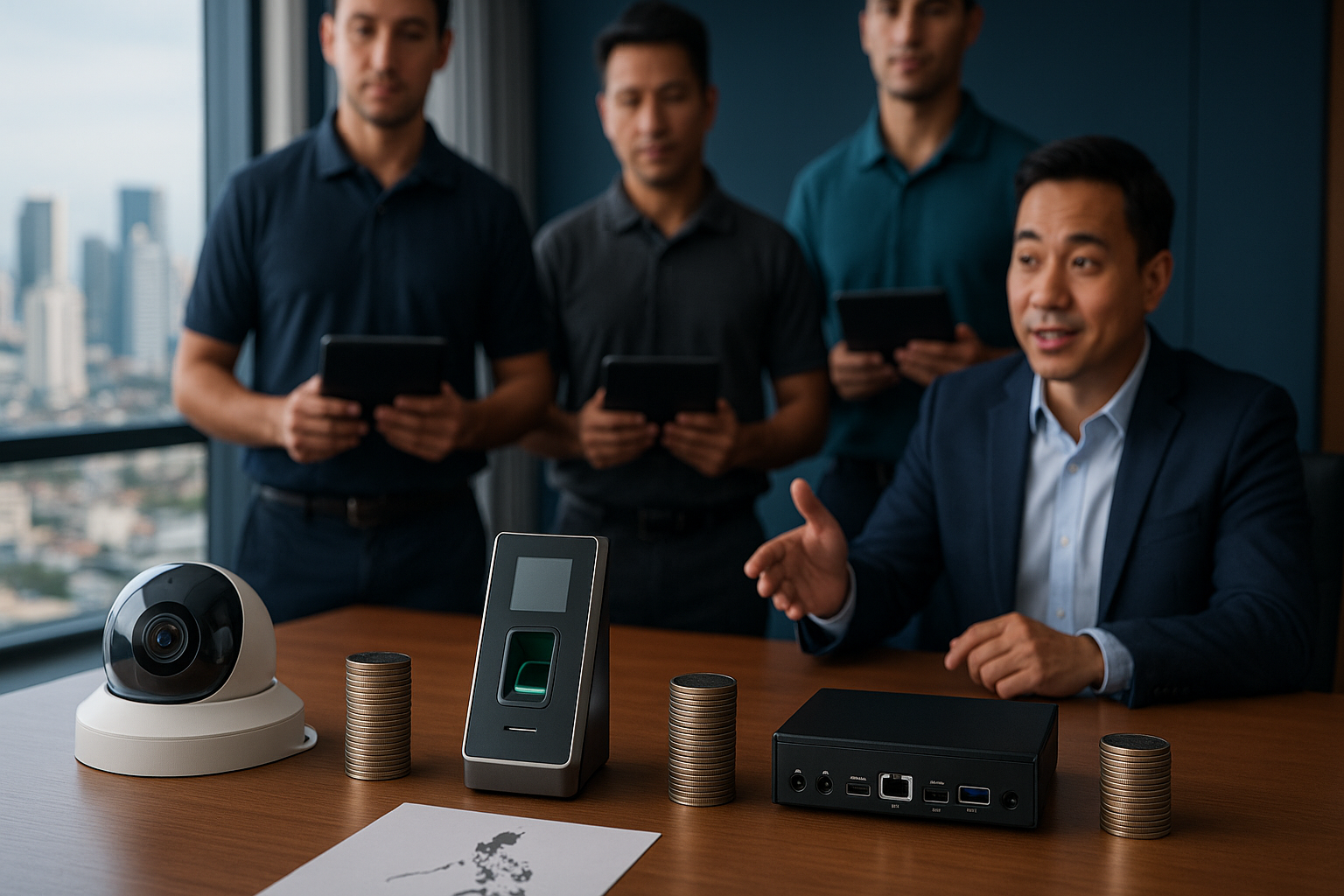
Video surveillance and camera systems CCTV and IP camera systems provide persistent recording and remote visibility. They perform well for asset protection, incident investigation, and integrating with analytics such as license plate recognition or people counting. Cameras make sense where you need evidence, remote monitoring, or to extend patrol coverage without adding staff.
Access control and door systems Electronic access control, keycards, and biometric readers lock down sensitive areas and track who enters and leaves. Use them in offices, data centers, warehouses, and anywhere you must control credentialed access or comply with audit requirements.
Alarm systems and monitoring Intrusion alarms, glass-break sensors, and panic buttons are an immediate alert layer. Alarm monitoring services forward alerts to a response team or local authorities. These systems are essential where an immediate response is critical, such as high-value retail shops or executive residences.
Integrated and managed security Large enterprises increasingly combine guards, cameras, access control, alarms, and remote monitoring into a single service with unified reporting. Managed security providers offer central monitoring, incident logging, and analytics that turn raw data into actionable security operations.
Cybersecurity and IoT considerations Physical security and cybersecurity now overlap. Cameras, access control panels, and alarm systems can introduce network vulnerabilities. Ensure providers use secure configurations and that managed services include firmware updates, network segmentation, and credential management.
How pricing is structured in the Philippines
Security costs in the Philippines vary by location, scale, and service complexity. Vendors typically price in a few common ways:
- Guard services: monthly or hourly client rates that cover wages, agency fees, statutory benefits, and supervision.
- Equipment sales and installation: one-time charges for cameras, access control units, wiring, and labor.
- Monitoring and maintenance: monthly subscriptions for alarm or camera monitoring, plus service-level fees for maintenance.
- Managed services: monthly fees for integrated solutions, reporting, and incident response.
Be aware that quoted prices often exclude value-added items such as permits, additional cabling, temporary scaffolding, or major civil work.
Realistic price ranges you can expect
Below are practical ranges in Philippine pesos. Use these figures to form budget estimates, not final bids. Actual quotes depend on specific site conditions and vendor offerings.
Security guards An unarmed security guard supplied by a licensed agency typically costs a client roughly PHP 15,000 to PHP 22,000 per month. Armed guards command higher rates, often PHP 20,000 to PHP 30,000 per month, because of extra training, licensing and liability coverage. For short-term or event work, hourly rates commonly fall between PHP 150 and PHP 350 per hour depending on the guard’s specialization.
CCTV systems A basic closed-circuit camera with installation suitable for a small shop might range from PHP 10,000 to PHP 25,000 for a simple 2 to 4-camera analog system. A higher-quality IP camera system with four to eight cameras, network video recorder, and remote viewing will typically run PHP 40,000 to PHP 150,000, depending on camera model and resolution. Enterprise-grade installations with many cameras, intelligent analytics, and redundancy can climb into the hundreds of thousands.
Alarm systems and monitoring A basic household alarm installation often starts at PHP 8,000 to PHP 20,000. Professional monitoring services generally charge PHP 800 to PHP 3,000 per month, depending on response time, number of zones, and whether armed response teams are included.
Access control A single-door biometric or card access system, with installation, can cost PHP 20,000 to PHP 60,000. For multi-door solutions integrated into a central server, expect PHP 100,000 to PHP 500,000 for medium-sized offices once hardware, software, and installation are accounted for.
Integrated managed security For organizations that want a combined service with guards, cameras, central monitoring, and periodic reports, managed security contracts often start around PHP 50,000 to PHP 150,000 per month for small to medium sites. Larger campuses or distributed enterprises can expect significantly higher monthly fees as requirements scale.
Factors that drive price up or down
Location and risk profile make a big difference. Urban centers with higher crime or logistical challenges tend to have higher rates. Night shifts, holiday coverage, and overtime increase guard costs. Remote sites add transportation and mobilization fees for technicians and guards. Complexity of infrastructure, such as needing trenching for fiber or working at height for camera installation, will raise equipment installation costs. Contract length and exclusivity can influence discounts. Finally, service level commitments, like guaranteed response times, increase the vendor’s operational cost and your price.
Selecting top providers in the Philippines: what matters
Instead of relying solely on brand recognition, evaluate providers on these criteria:
Licensing and compliance. Confirm the vendor is licensed by the Philippine National Police to operate as a private security agency and that guards have valid credentials. For equipment work, check whether installers follow local electrical and telecom regulations.
Insurance and liability. The vendor should carry liability insurance and provide worker coverage for its personnel. Ask for certificates before work starts.
Training and supervision. Request details about training programs, refresher courses, and supervisory structure. A daily logbook system and periodic management site visits show active supervision.
Equipment ownership and warranty. Determine whether the provider supplies and maintains equipment, who owns it, and what warranties or service-level guarantees exist.
References and track record. Ask for local client references in similar industries and, when possible, visit a live site to see the solution in operation.
Incident response and escalation. Understand the vendor’s alarm verification, escalation pathways, and whether they coordinate with local police or private quick-response teams.
Data security and privacy. For systems that record video or process personal data, ask about data retention policies and whether monitoring software uses secure, encrypted communications.
Sample scenarios and ballpark budgets
Small retail store A single-store owner installs a 4-camera IP CCTV kit with remote monitoring and basic alarm system, and subscribes to monthly monitoring. Expect an upfront cost of PHP 40,000 to PHP 80,000 and monthly monitoring between PHP 1,200 and PHP 2,500.
Residential gated community A village installs access control at the main gate, three CCTV cameras, and two security guards on 12-hour shifts. Upfront equipment and gate work might cost PHP 150,000 to PHP 350,000, while monthly staffing and monitoring run PHP 80,000 to PHP 150,000 depending on guard numbers and shifts.
Manufacturing plant A medium plant requires perimeter detection, 20 cameras, two controlled access points, and 24/7 manned security. Initial systems and integration could be PHP 500,000 to PHP 2,000,000, with monthly managed services and guard costs ranging PHP 200,000 to PHP 600,000.
How to get accurate quotes and compare offers
Start with a site survey. Any reputable provider should visit the location, document vulnerabilities, and produce a written proposal. Ask for a breakdown of costs, including equipment, installation, warranties, monthly monitoring, and pass-through local taxes or permits. Compare at least three proposals and score them on service, compliance, price, and response time.
Negotiate service level agreements. Define measurable KPIs such as guard punctuality, camera uptime, mean time to repair, and incident reporting cadence. Include penalties or credits for missed SLAs and a clear exit clause for poor performance.
Beware of low initial bids. Very low equipment prices may conceal inferior hardware or minimal warranties. Similarly, unusually low guard rates might indicate noncompliance with labor or licensing requirements, which can expose you to legal and reputational risk.
Cost-saving strategies that do not reduce security
Use layered security. Combine a few high-quality cameras and alarms with periodic patrols rather than trying to cover every square meter with human guards. Central monitoring reduces the need for multiple on-site staff.
Phase deployment. Start with critical zones and expand over time. Implementing access control at high-value areas first will deliver immediate benefit without a large upfront sum.
Negotiate bundled contracts. Buying equipment and monitoring from the same vendor often reduces integration headaches and yields lower total cost of ownership.
Conduct regular reviews. Quarterly performance reviews allow you to tweak patrol schedules, camera placements, and response protocols to improve effectiveness without incremental cost.
Final checklist before you sign
Verify licenses and insurance. Confirm guards and firm are properly licensed and insured.
Get everything in writing. Scope, costs, SLAs, termination terms, warranties, and maintenance schedules should appear in the contract.
Confirm ownership and transfer terms. Know who owns installed equipment and what happens to data and gear on contract end.
Agree on training and onboarding. Ensure guards and staff will receive site-specific briefings and that response teams have contact lists.
Plan for reviews and audits. Set dates to review performance and allow adjustments to staffing or technology.
Conclusion
Security solutions Philippines require choices that balance human presence, electronic coverage, and operational resilience. Prices vary widely depending on risk, technology, and service level, but realistic budget ranges and a rigorous selection process will help you avoid costly mistakes. Prioritize licensed providers, clear service agreements, and layered protection. With the right planning and vendor, you will get a solution that protects people, assets, and the continuity of your operations without unnecessary expense.