
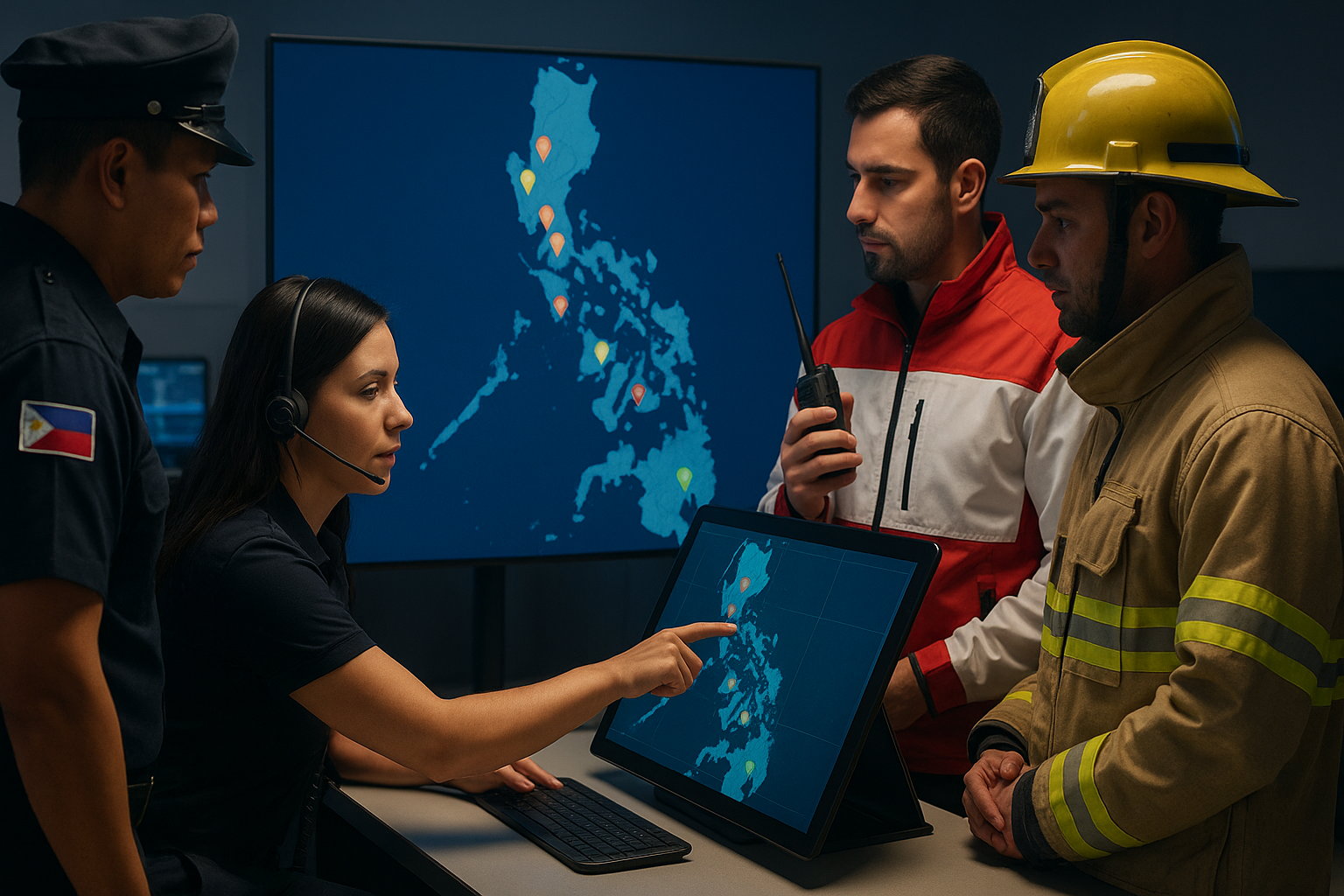
The alarm sounds at 2:14 a.m., lights flash on the perimeter cameras, and your security provider calls to say a team is en route. Two minutes later a marked patrol arrives, secures a gate, and begins a sweep while your staff waits, calm but alert. That contrast between panic and order captures the value of a reliable security response in the Philippines, where a trained team arriving fast can prevent losses, preserve evidence, and keep people safe.
Security response Philippines covers a mix of public emergency services and private rapid reaction teams that protect homes, businesses, and communities. Whether you are a homeowner, a facilities manager, or a small business owner, understanding who responds to different incidents, how response works, and what you should do before, during, and after an emergency will make the difference between confusion and control. This guide explains what to expect from official and private responders, how they coordinate, and practical steps to strengthen your own preparedness.
What security response means in the Philippines
Security response is the set of actions taken immediately after an alarm, threat, or incident is detected. That response might come from the police, fire department, ambulance services, barangay officers, the Red Cross, or a private security company. Private security response usually involves monitored alarms, rapid response vehicles, and onsite guards who can secure a scene and liaise with authorities. Public services have law enforcement, firefighting, and medical care authority and resources not available to private teams. Effective security response blends both, using private teams to stabilize and public agencies to lead investigations and emergency treatment.
Who provides emergency services and when to call them
Police: The Philippine National Police responds to crimes in progress, suspicious persons, and incidents that require arrests or formal investigation. Call the national emergency number, and if your private security detains a suspect, expect the police to take custody and file a report.
Fire services: The Bureau of Fire Protection handles fires, structural collapses, and hazardous material events that threaten life or property. A small incident that looks like a smoke source can escalate quickly, so call the fire service early while your security team establishes scene control.
Medical and ambulance services: Emergency medical services include hospital ambulances, private EMS providers, and the Philippine Red Cross in many areas. For serious injuries, unconscious persons, chest pain, or severe bleeding, call an ambulance immediately and start first aid if trained.
Barangay tanod and local officials: Barangay officers provide immediate community-level support, crowd control, and initial reporting to higher authorities. They can be helpful for minor disputes, local information, and liaising with police in rural areas.
Private security companies: Many firms provide alarm monitoring, rapid response teams, gatekeepers, and patrol services. They secure scenes, detain suspects within legal limits, protect evidence, and escort emergency responders when needed. Their role is to buy time and reduce risk until official responders arrive.
How public and private responders interact
When a private security team arrives first, their priority is to secure people, preserve evidence, and call public services. They must avoid overreaching authority. Security guards do not replace the police. Guards can detain a suspect as a citizen under the law, but they must hand custody to sworn police officers when they arrive. For fires or medical emergencies, private teams support by evacuating, performing triage if trained, and keeping bystanders clear.
Coordination works best when formal protocols exist. A facility with a written emergency plan will have clear instructions for private guards to notify the police and fire departments, and to provide access control when those agencies arrive. Good security providers share incident reports and footage with investigating authorities, which accelerates investigations and insurance claims.
What to expect from a professional security response provider
A professional provider has three visible traits: speed, transparency, and capability. Speed means a predictable response time commitment, often defined in a service level agreement. Many urban providers aim for single-digit minute responses inside their service area. Transparency means clear communication from call to conclusion, including who is dispatched, arrival time, and an incident report afterward. Capability encompasses trained guards, marked vehicles, basic medical supplies, radios, and an evidence procedure for cameras and alarms.
A high-quality team arrives in uniform with identification, conducts a quick risk assessment, calls public emergency services if needed, secures the perimeter, and preserves relevant footage or physical evidence. After the scene is managed, they produce a written incident report and document chain of custody for any items or footage turned over to police or clients.
Realistic response times and limitations
Response times vary with location, traffic, and time of day. Metropolitan areas typically see quicker arrivals because providers deploy more units and travel distances are shorter. Rural or island communities will have longer waits, and sometimes the barangay or municipal police will be the only immediate responders. Private security cannot replace specialized rescue teams or hospital emergency care, so when an incident requires those services, focus on stabilizing the scene and getting official help.
Choosing a security response provider in the Philippines
Select a provider by evaluating licensing, training, technology, local knowledge, and contractual clarity. Confirm the agency is legally licensed to operate under national rules governing private security. Ask about guard training, medical competency, firearm policies for armed guards, and how staff coordinate with police and fire services. Visit the provider’s operations center if possible and ask to see monitoring and dispatch procedures.
Technology matters. Providers that integrate CCTV, access control, and alarm systems into real-time monitoring are more effective at pinpointing incidents and directing response teams. Check whether the firm maintains a redundancy plan for communications during outages, and whether they can provide remote video evidence for police. Contractual elements should include clear response time targets, reporting requirements, and insurance coverage for on-premise damage or injury. Avoid vague agreements; require a written service level agreement that spells out responsibilities.
Preparing your property and staff for emergencies
Preparation reduces reliance on luck. Start by compiling an emergency contact list that includes your security provider, the local police precinct, fire station, barangay office, nearest hospital, and key internal staff. Keep both printed and digital copies in easily accessible locations. Create an incident action plan that describes what to do for common scenarios such as burglary, fire, flood, and medical emergencies. The plan should assign roles: who calls authorities, who evacuates, who secures records, and where staff gather.
Train your staff on simple measures that save lives. Teach basic first aid and bleeding control, the location of emergency exits and fire extinguishers, and how to trigger alarms and notify the security provider. Conduct regular drills that simulate a silent alarm, a fire, or a medical collapse, and review timing, handoffs, and communication clarity after each exercise. For residential communities, coordinate with the homeowners association and barangay to map out escape routes and roles during an emergency.
Scenario guidance: practical steps during different incidents
During a break-in at night, prioritize the safety of people over property. If you are inside and the intruder is unknown, lock and secure doors, retreat to a safe room if possible, call the security provider, and then call emergency services. Avoid confronting suspects. If you must leave, take a mobile phone and stay in a public, well-lit area where responders can find you.
If a fire starts, activate the alarm, evacuate according to preplanned routes, and call the fire service. Trained personnel can attempt to use a fire extinguisher on a small, contained blaze, but never re-enter a burning building. When the security response team arrives, they will isolate the area and assist first responders with access and documentation.
For a serious medical event, call an ambulance immediately and begin appropriate first aid. A security team with basic life support training can assist until paramedics arrive. If staff are trained in CPR and automated external defibrillator use, apply those skills without delay.
For violent confrontations, the safest options are rapid evacuation, concealment, and alerting authorities. Private security can provide a buffer and help control exits so police can respond safely.
Documenting incidents and handling evidence
Careful documentation matters for investigations and insurance. A security response provider should produce a written incident report, preserve CCTV footage with timestamps, and secure physical evidence in a way that preserves chain of custody. For businesses, preserve transaction logs, access records, and visitor lists. Do not allow bystanders to tamper with a scene. Promptly share digital evidence with police and your insurer, and keep copies for your records.
Legal and regulatory essentials
Private security in the Philippines operates under national laws that require agencies and guards to be licensed and trained. Armed guards must meet additional standards and certifications. Security personnel do not replace sworn police authority, and their use of force is constrained by law. When a private guard detains a suspect, that individual must be handed to police as soon as they arrive. Organizations that contract security services retain a duty of care to employees and visitors, so insurance and clear contractual terms are critical. Consult a legal advisor to understand liabilities specific to your operations.
When to upgrade your security response posture
Upgrade your security posture when your risk profile changes. Signs include repeated thefts, vandalism, threats against staff, expansion into new facilities, higher foot traffic, or local crime trends shifting. Upgrades can include 24/7 monitoring, more frequent patrols, access control upgrades, better lighting, CCTV with remote monitoring, and emergency lighting for evacuation routes. Consider an independent security assessment from a certified professional to prioritize investments.
Working with local authorities and community stakeholders
Good security response relies on relationships. Build ties with the nearest police station, fire station, barangay officials, and the local hospital. Invite them to your site for a familiarization visit so they can find access points quickly during an emergency. For subdivisions and commercial areas, create multi-stakeholder emergency plans and hold periodic tabletop exercises to test coordination. Strong community ties shorten response times and reduce confusion during real incidents.
Conclusion
A dependable security response Philippines combines prepared people, licensed private teams, and responsive public services. Understand who does what, set clear expectations with your security provider, train your staff, and create simple, rehearsed plans for common emergencies. When alarm bells ring, the difference between chaos and control will come down to preparation, clear communication, and a provider who arrives ready to contain problems and coordinate with official responders. Start by reviewing your emergency contacts and asking your provider for a copy of their response procedures, then practice the scenario most likely to affect your property. Those small steps yield safer outcomes and faster resolution when an actual emergency happens.