
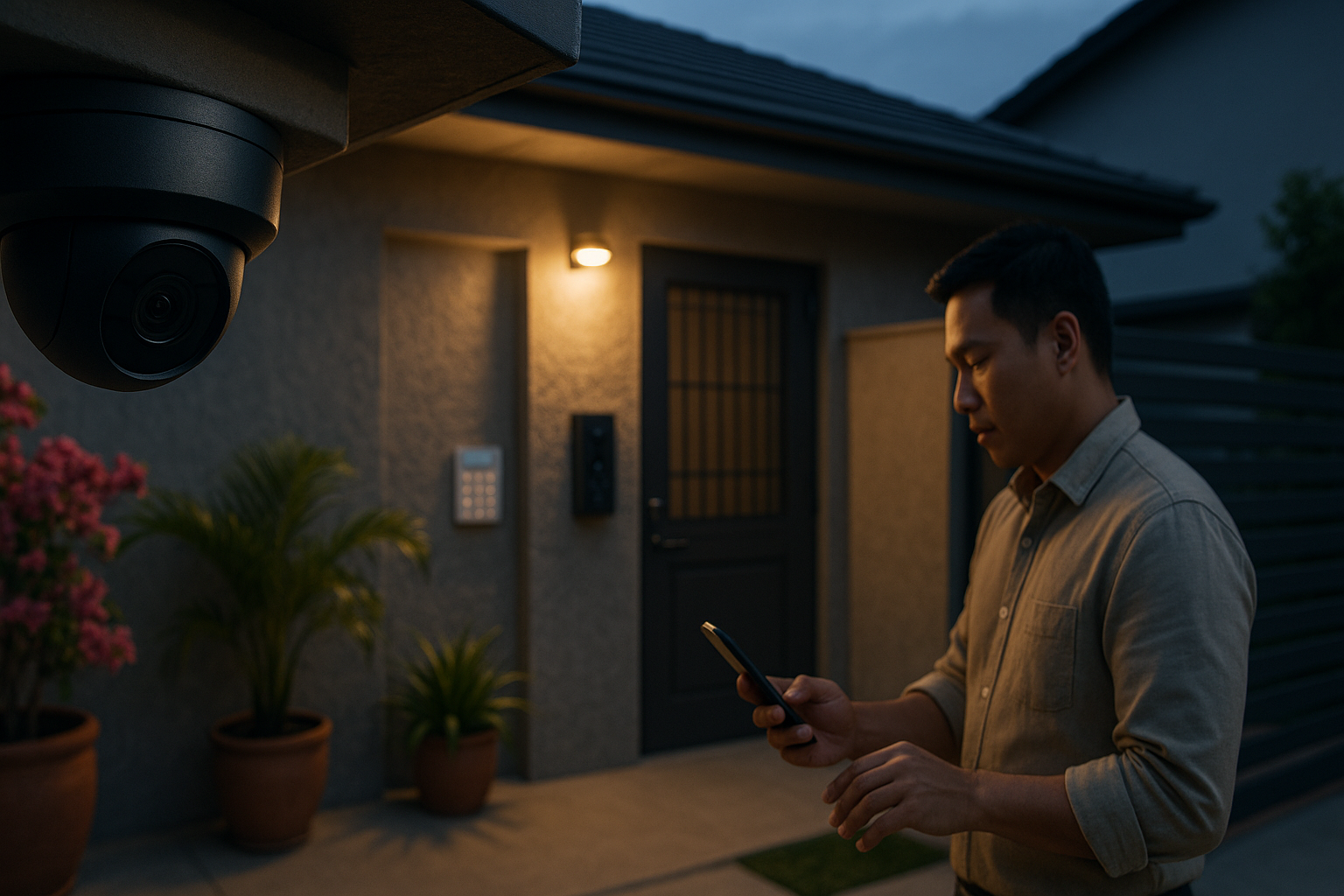
Many home break-ins begin with something small: an unlocked service door, an overgrown hedge that hides a window, or a social media post that announces an empty house. Residential security Philippines boils down to practical, layered choices that reduce risk and make your home a harder target.
This article walks through straightforward measures you can apply whether you own a single-family house or rent a condo. The focus is on what actually works here: physical reinforcements suited to local building types, low-cost deterrents that matter, choices for electronics and monitoring that consider power and connectivity issues, and everyday habits that stop opportunistic crime before it starts. You will find examples and concrete steps you can implement this week, plus guidance on preparing for fires, typhoons, and other emergencies that affect safety.
Start with a realistic risk check
Before buying hardware or installing cameras, assess how your property invites or discourages crime. Walk the perimeter, look at access points, and imagine being a stranger at night. Which gate, window, or balcony could be entered without climbing a ladder? Where can someone hide out of sight? How often does a delivery person stand at your door?
Write down the vulnerabilities you notice, then prioritize them. Fixing a weak front door frame will usually reduce risk far more than an expensive camera aimed at a leaf-covered yard. For many Filipinos, common priorities include securing sliding doors and windows, reinforcing garage gates, and improving outdoor lighting. Prioritize fixes that stop the simplest methods burglars use, because most break-ins do not involve heavy tools or long planning.
Perimeter and access control that deter
A clear, defensible perimeter sends a message. Gates, fences, and visible barriers create delay, and delay is deterrence. If your property has a hollow gate, consider strengthening it or placing a visible lock. For subdivisions and gated communities, ensure gate operators are maintained and that pedestrian gates lock reliably.
Lighting is one of the best low-cost deterrents. Motion-activated lights that illuminate pathways, driveways, and the front yard make it risky for intruders to approach unseen. Use warm-white LED fixtures with enough lumen output to remove dark shadows, and point them toward likely approach routes rather than into neighbors windows.
Landscaping affects safety more than most homeowners expect. Keep hedges below waist height around windows and entrances so there are no hiding spots. Instead of climbing-friendly plants, choose shrubs with dense, thorny growth where appropriate. If you use perimeter CCTV, make sure no overhanging branches obscure the view.
Doors, locks, and windows that resist forced entry
The front door is your first line of defense. A quality deadbolt and a reinforced door frame are worth the investment. Replace short screws in the strike plate and hinge screws with three-inch screws that anchor into the structural framing behind the door. Install a metal strike plate and consider a door viewer for identity checks.
Sliding doors and windows require special attention. Add anti-lift pins to prevent the sash from being forced out of its track. A simple metal rod or dowel placed in the sliding track provides an extra mechanical stop. For ground-floor windows, fit metal grills where local codes permit, or use security films to slow glass breakage. Make sure any grills and bars have quick-release hinges on the inside so you can exit quickly in an emergency.
Balconies and second-floor windows are not invulnerable. Ladders, awnings, and close-standing trees create access points. Trim branches and move outdoor furniture away from edges. For upper-level windows, consider key-operated locks and sensors tied to an alarm system.
Electronics and monitoring that fit the Philippine context
CCTV and alarm systems help, but placement, reliability, and power matter more than resolution. Place cameras to cover chokepoints: the front gate, main door, driveway, and back windows. Avoid low, obscured angles that are easy to tamper with.
Choose weatherproof outdoor cameras and plan for local power and internet interruptions. A UPS for your router and recorder keeps devices running during short outages. For longer outages during storms, battery-backed cameras or systems that record to an on-site hard drive will preserve footage. If you use cloud storage, account for the data cost and the reliability of your internet provider.
Alarms should be layered. A loud local alarm alone will scare many intruders away. Monitored alarms that alert a security company or your phone add rapid response but come with monthly fees. For DIY monitoring, configure notifications so you receive only meaningful alerts and not dozens of false alarms. Combine door and window sensors with motion detectors inside.
Smart devices offer convenience but consider security and privacy. Change default passwords, update firmware, and use two-factor authentication when available. Keep cameras focused on your property; avoid pointing them into a neighbor s yard.
Condo and rental specific strategies
Security in condos and rented homes is a different problem. You often cannot modify the structure, and shared entrances change the risk profile. Focus on what you can control: locks, visibility, and procedures.
Upgrade the door lock if allowed, or use a reinforced door jamb kit that requires minimal drilling. Install a strike plate and use a portable door jammer for additional resistance. Use a secondary lock such as a chain or a swing bar to screen visitors.
Package theft is a common condo issue. Instruct delivery drivers to leave packages with reception, or use secure parcel lockers if available. If you receive many deliveries, ask a trustworthy neighbor or building staff to hold them.
When you rely on building security, know the rules. Record the guard s name, the main office number, and how to report incidents. Visit the security office to learn their procedures for outsiders and for emergency response. Being familiar with the system reduces delays if an incident occurs.
Daily habits that cut risk dramatically
Small routines protect as much as expensive hardware. Lock every entry whenever you leave, even for short trips. Close windows before you sleep. Keep tools, ladders, and items that make climbing easier out of sight.
Be mindful about what you share online. Publicly posting that you are away, or posting real-time vacation photos, signals opportunity. Delay sharing travel photos until you return. Limit friend lists and review privacy settings on social platforms.
Establish a neighborhood rhythm. Exchange emergency contacts with a neighbor and agree to watch each other s houses when someone is away. A neighbor who collects mail or moves a plant pot creates the appearance of occupancy and reduces the window of opportunity for burglars.
Fire, flood, typhoon and earthquake readiness for safety
Security includes safety from natural hazards common in the Philippines. Prepare an accessible emergency kit with water, nonperishable food, medications, flashlights, batteries, a printed list of phone numbers, and a basic first aid kit. Keep important documents in a waterproof, fireproof container and maintain a digital backup.
Install smoke detectors and test them monthly. For kitchen safety, use a fire extinguisher rated for common household fires and place it in an easy-to-reach location. Learn how to safely shut off LPG gas cylinders and the main electrical breaker in case of an emergency.
During typhoons and earthquakes, locking down exterior security can conflict with evacuation needs. Plan for both scenarios: ensure external grills have quick-release mechanisms and that emergency exits remain usable. Secure outdoor items that could become projectiles and anchor larger furniture that might topple during an earthquake.
Working with security personnel and community systems
Hiring a guard or a private security agency can be sensible for larger properties or subdivisions. Before hiring, ask for the agency s accreditation and request the guard s ID and certifications. Require a written contract that outlines duties, shift schedules, replacement policies, and background checks. Include a trial period to confirm suitability.
Community-based security, such as barangay tanod coordination or homeowners association patrols, adds effectiveness through shared awareness. Participate in meetings, report suspicious activity, and push for basic standards: functioning street lighting, secure gate operations, and timely repairs.
If an incident occurs, report it promptly to the appropriate authorities and to your insurance provider if applicable. Preserve evidence, such as CCTV footage, but avoid contaminating a potential crime scene. Keep a log of incidents and communication with authorities, building management, or the security company.
Budgeting and maintenance, practical timelines
Security is an ongoing commitment. Create a simple maintenance calendar. Monthly: test smoke detectors and alarms, and check door and window locks. Quarterly: trim landscaping and test backup power solutions. Annually: service gate motors, renew contracts, and review camera firmware updates.
Start with low-cost, high-impact items: reinforce door frames with long screws, install motion lights, and add visible locks to sliding doors. Next, invest in a basic CCTV setup or an alarm panel with local monitoring. High-end items such as 24/7 monitoring, biometric locks, or integrated smart home security can follow as your budget allows.
When choosing equipment and services, read recent reviews and ask for local references. A locally responsive installer will often provide better support than a cheaper online purchase with no local service.
Two short scenarios to illustrate practical choices
Scenario one, suburban house near Quezon City: The family reinforced their front door with a deadbolt and three-inch screws, added motion lights at the driveway and rear, and mounted an outdoor camera above the gate that records to a local NVR with battery backup. They trained a neighbor to collect packages when they travel. During heavy rains the UPS kept the router and CCTV running for several hours.
Scenario two, condo in Makati: A resident invested in a portable door jammer and a smart lock with temporary access codes for cleaners. Packages were sent to a nearby parcel locker service, and the resident configured camera alerts for the main door only, avoiding neighbor privacy issues. When the building experienced a minor theft, the resident s clear footage helped identify the suspect through building security.
Practical next steps you can do this week
Begin with a perimeter walk and a short checklist. Reinforce one weak entry, install one motion light, and set up a basic camera or test an existing one. Exchange contact details with at least one neighbor and program local emergency contacts into your phone. Create or refresh a simple emergency kit and place it in a known location.
These actions build immediate resilience while giving you time to plan larger upgrades. Security improves when small, consistent steps accumulate.
Conclusion
Residential security Philippines is about sensible layers, local realities, and daily habits. No single device prevents every risk. A reinforced door, visible lighting, sensible camera placement, a habit of locking up, and a neighborhood contact form a practical, affordable defense. Start with the most vulnerable points you discovered, make those low-cost fixes this week, and add monitoring and preparedness measures over time. When safety becomes a set of steady practices, your home becomes a much less attractive option for criminals and a safer place for your family.