
A break-in, a flooded ground floor, or a power outage that disables your alarm will turn a house into a stressful problem in a matter of minutes. That is the harsh reality many homeowners in the Philippines face. Property security Philippines is not only about locks and cameras, it is about matching practical measures to local risks, routines, and budgets so your home remains safe, day and night, rain or shine.
Protecting a property in the Philippines requires understanding both human and environmental threats. Urban neighborhoods face opportunistic theft and motorcycle snatch incidents. Suburban subdivisions must contend with gate vulnerabilities and transient workers. Coastal and low-lying areas add typhoons and flooding to the list. This article explains clear, practical steps you can take now, whether you own a condo, a townhouse, or a single-family home. You will find measures that range from inexpensive habits that reduce risk immediately to thoughtful investments that pay off over years.
Start with a realistic risk assessment
Effective property security Philippines begins with a simple, honest survey of your property. Walk the perimeter at night and during the day, and look for weak points. Which gate or window is easiest to reach? Where does foliage create hiding spots? Are exterior lights functioning? Which doors are left unlocked by habit? Make notes and prioritize the most exposed entry points first.
Assess neighborhood patterns as well. Talk with neighbors or barangay officials about recent incidents. In many communities, thefts are opportunistic, targeting homes with visible valuables, open gates, or poor lighting. Your risk assessment should combine property vulnerabilities, local crime patterns, and seasonal environmental threats such as flooding during the rainy months.
Strengthen physical barriers where it matters most
A reinforced front door and reliable locks are more valuable than expensive alarms if anyone can push a poorly installed door inward. Replace hollow core doors with solid core or metal doors if possible. Fit a quality deadbolt with a long throw and secure the strike plate to the frame with long screws that reach the wall stud. For sliding doors and windows, fit a steel rod or purpose-made stopper to prevent them from being forced open, and install strong locks designed for sliding frames.
Windows deserve attention because many break-ins in the Philippines exploit ground-level windows or kitchen vents. Security grills protect windows without blocking airflow. When grills are used, ensure that they have quick-release mechanisms inside to allow safe egress during fire or earthquake. For older wooden frames in humid or coastal areas, replace or repair rotted frames and use corrosion-resistant hardware to prevent failure.
Gates and garage doors must be both sturdy and properly installed. Hinges, tracks, and latches should be checked regularly. In coastal locations choose materials and finishes that resist rust, and apply protective paint or galvanizing where needed. If you install an automatic gate or garage opener, make sure a mechanical manual override is accessible from inside in case of power loss.
Use electronics intelligently, not just expensively
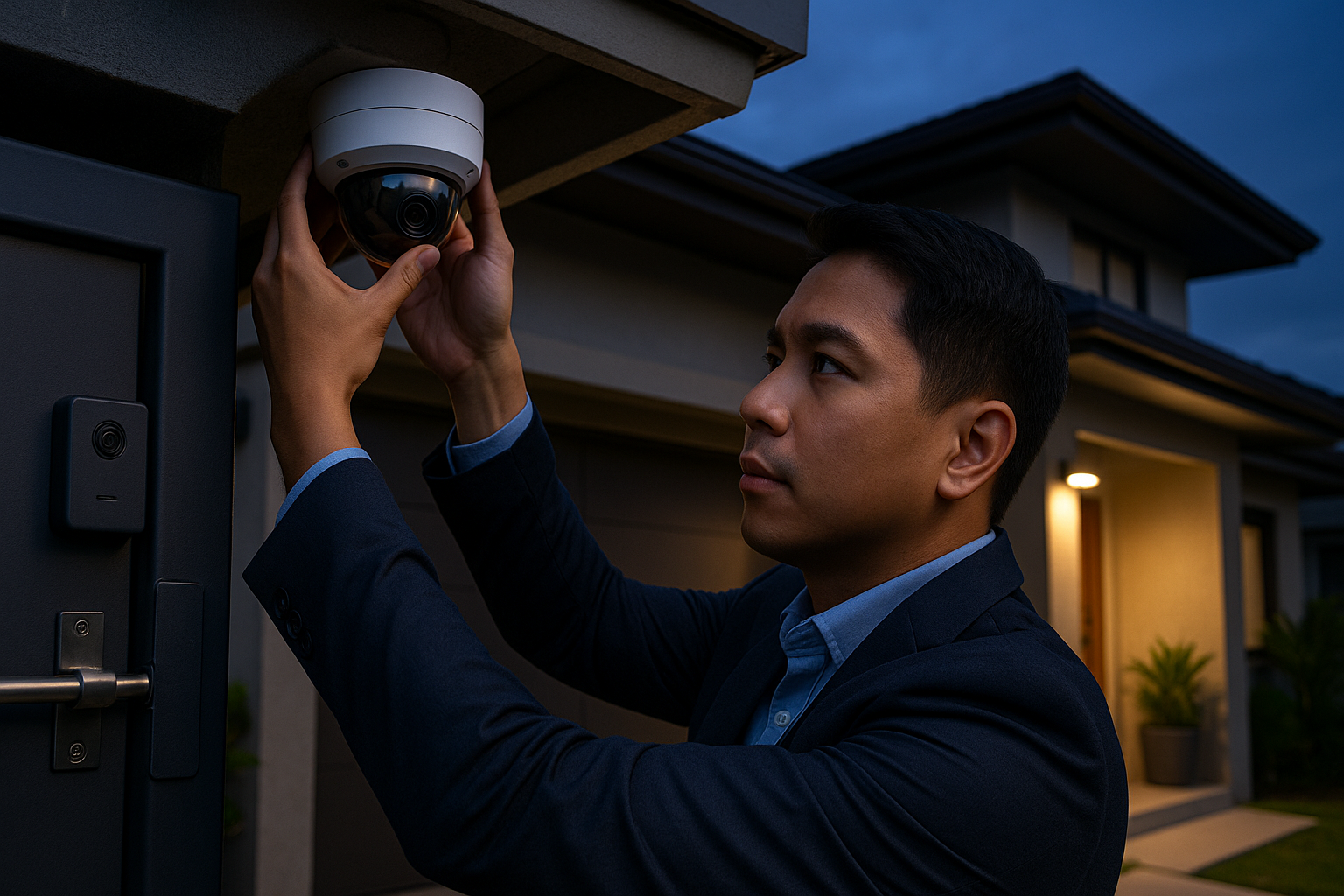
CCTV and alarm systems help, but they must be designed for local realities. Power interruptions are common in many areas, so choose systems with backup batteries or options for solar power. A CCTV camera that records continuously to a local DVR will miss events if the DVR loses power and has no battery backup. Consider cameras that store footage to a local SD card as well as to cloud storage, and ensure the cloud service uses an account tied to you, not a technician or neighbor.
If internet quality is unreliable, opt for cameras with 4G capability or a GSM alarm panel that can send SMS alerts to a mobile phone. For houses that rely on unstable electricity and internet, simpler but effective choices include motion-activated floodlights and sound-producing alarms connected to a battery-backed siren. Place cameras to cover likely entry routes: the front door, side door, back gate, and driveway. Avoid placing cameras in private neighbors spaces.
Smart doorbells and video intercoms offer convenience, but they depend on stable connections. Use them as part of a layered approach, not the only line of defense. Test equipment regularly. A camera with poor night performance will not help when incidents most often happen after dark.
Improve lighting, visibility, and landscape design
Well-maintained visibility reduces the chance someone hides near your house and increases the chance a passerby notices suspicious activity. Trim hedges and remove low branches that create concealment. Keep the area directly outside doors and windows free of tall plants. If you have a driveway, replacing grass with gravel creates noise when someone approaches, which serves as a natural alert.
Exterior lighting is a simple, high-impact upgrade. Motion-activated lights at the perimeter and near entry points deter intruders and save electricity. Use warm white LEDs for clear color rendering and long lifespan. In locations without reliable electricity, solar motion lights now perform much better than older models, and a few strategically placed solar units can protect approaches and gates.
Avoid planting fruit trees or dense shrubs right next to walls. Such vegetation invites burglars who can hide while cutting through fences or waiting for residents to leave. Instead, plant thorny or prickly species under windows if you want natural deterrents, but make sure they do not block escape routes during emergencies.
Cultivate secure habits and household routines
Most home crime results from human error, not clever tools. Simple habits dramatically reduce risk. Lock doors and windows every time you leave, even if only for a few minutes. Keep spare keys with trusted people or in secure lockboxes, not under doormats. Do not announce extended absences on social media. If visitors will be on site while you are away, give clear instructions to workers and require identification for anyone who claims to be a repair person.
Use a small, fire- and water-resistant safe for passports, certificates, jewelry, and emergency cash. Bolt the safe to a concrete floor or wall where feasible. For documents, keep digital backups stored in encrypted cloud accounts so you can access them if physical copies are lost in a flood or fire.
When selling or disposing of household items, break boxes down before putting them at curbside. Boxes labeled with brand names of electronics advertise assets inside. Have neighbors collect deliveries if you are not home, and consider using parcel lockers or pick-up points where available.
Partner with neighbors and local institutions
Property security Philippines works best when households act together. A vigilant neighborhood is a safer neighborhood. Create or join a neighborhood watch, coordinate with barangay tanod, and exchange contact information for emergencies. A WhatsApp or Viber group for residents is effective for sharing alerts and quick updates, but designate a few admins to avoid noise.
For gated communities and subdivisions, understand how private security operates. Security guards reduce risk, but they require clear procedures, supervision, and support from residents. Report suspicious activity to the barangay and to the nearest police station when necessary. Keep records of incidents, including dates, times, and descriptions, to help authorities see patterns.
Prepare for storms, floods, and earthquakes
Disasters create security vulnerabilities. After a typhoon, roads and fences may be damaged, creating new access routes for looters. During prolonged outages, alarms and cameras can fail. Plan for these contingencies. Secure loose items in the yard before storms, store vital electronics off the floor in flood-prone rooms, and keep essential documents in waterproof containers.
Create a simple emergency checklist: turn off the main gas valve if you evacuate, unplug non-essential appliances to avoid short circuits when power returns, and move portable valuables to the upper floor when a major flood warning is issued. Photograph important possessions and upload those images to a cloud account. If you have relevant insurance, document damage promptly and keep records of communications with adjusters.
Review your insurance coverage to understand what is included and excluded. Many policies in the Philippines treat flood and typhoon damage differently. Do not assume full coverage without written, specific confirmation. If your area is prone to flooding, ask about flood riders or separate policies that explicitly cover flood and storm surge.
Cost-effective upgrades that offer strong returns
Not every upgrade requires a large budget. Replacing weak locks, adding a wide-angle peephole or small security camera at the front door, and installing motion lights often prevent more incidents than pricier items. Reinforce doorframes and hinges, install a simple alarm with a battery backup, or fit window grills with internal quick-release devices. For rural homes, consider investing in a reliable battery generator or a solar battery system to keep alarms functioning during outages.
When budgeting, prioritize measures that reduce the most risk for the least cost. A solid deadbolt, good outdoor lighting, and an informed neighbor are a stronger trio than an expensive alarm system that is rarely maintained. Over time, a layered approach builds resilience.
How to choose professional help and what to ask for
Hire licensed and reputable security contractors for major installations. Ask for references and visit recent installations if possible. Confirm warranties and service terms in writing, and understand who will maintain equipment after installation. For alarm monitoring services, clarify response protocols and whether the company will call local authorities directly or only notify you.
For security guards and private firms, check credentials and ask about training, licensing, and insurance. Request a written schedule of patrols and incident reporting procedures. For pest or repair contractors, insist on identification and ask neighbors about their experience. Clear, written contracts reduce misunderstandings and set expectations.
Conclusion
Property security Philippines is achievable through practical, layered steps that match local threats and household routines. Start with a realistic assessment, shore up the most exposed access points, and adopt habits that keep your home less attractive to opportunistic criminals. Use electronics where they provide real coverage, and prepare for storms and outages so your systems work when you need them. Work with neighbors and professionals when problems exceed what you can handle alone. Small, well-chosen investments and consistent routines will protect your home, your family, and your peace of mind.