
Every peso lost to theft, error, or supplier fraud is a peso that does not fund salary increases, store improvements, or margin for growth. Retailers and asset managers in the Philippines face a unique mix of challenges, from high foot traffic in urban malls to informal supply chains in provincial towns. Loss prevention Philippines is about translating practical, low-friction strategies into measurable reductions in shrink, while keeping customers comfortable and compliant with local law.
Why loss prevention Philippines matters for your bottom line and brand
Shrink quietly erodes profit. Most retail operators measure shrink as a percentage of sales and treat it as an operational metric, but it also reflects inefficiency, risk exposure, and brand vulnerability. A single pattern, such as unchecked returns fraud or an employee colluding with a supplier, can multiply losses quickly. For Filipino retailers, the cost of shrink shows up differently depending on store type. A supermarket with thousands of SKUs loses revenue through repeated small thefts and administrative errors. A chain of convenience stores suffers when cash handling lapses compound across locations. A warehouse or distribution center risks large, discreet losses that only surface during audits. Tackling these problems protects cash flow, preserves customer trust, and reduces legal exposure.
Common sources of retail and asset loss in the Philippines
Shrink may start small, but it comes from several repeatable sources. External theft includes shoplifting and organized retail crime. Internal theft covers employee pilferage, unauthorized discounts, voided transactions, and manipulations at the POS. Administrative errors happen through poor receiving, mislabeling, or inaccurate inventory counts. Supplier fraud appears as short shipments, bogus invoices, or duplicate billing. Non-inventory asset loss affects company property such as tools, laptops, and vehicles. Countries with high volumes of informal commerce, like the Philippines, also contend with returns abuse and barter-style disputes that complicate formal recovery.
Practical retail strategies that reduce loss without alienating customers
Preventing loss starts with policies and store design that reduce opportunity and raise the perceived risk of theft, while keeping the shopping experience positive.
Store layout and visibility. Configure aisles and displays so staff can see most of the sales floor from registers. Position high-theft items closer to staffed areas. Use lower shelving near checkout and higher shelves in low-theft sections. Good lighting and uncluttered sightlines make casual observation effective.
Cash handling controls. Limit the number of people authorized to access the cash drawer. Use dual-control procedures for large deposits and require two signatures for cash counts over a threshold. Train cashiers on when to flag suspicious activity. Daily till reconciliations catch discrepancies before they compound.
POS rules and exception reporting. Configure your POS to block certain combinations of discounts and voids unless approved by a manager. Generate automated exception reports for voids, refunds without receipts, and manual price overrides, and review them daily. This converts routine oversight into a fast feedback loop.
Customer service as prevention. Staff who greet and engage shoppers reduce casual shoplifting. A brief, courteous acknowledgement at entry raises alertness without hostility. In the Philippines, where friendly service matters, training employees to watch while remaining hospitable preserves brand reputation and prevents conflict.
Inventory discipline. Regular cycle counts focused on high-value items identify variances faster than annual counts. Reconcile shipments at delivery with signed receiving documents and inspect items before accepting. Use ABC analysis to concentrate effort where the value-at-risk is greatest.
Returns and warranty controls. Standardize return approvals, require receipts and ID for large returns, and inspect returned items before restocking. Track returns by customer and flag repeat patterns. For warranty service, require authorization numbers and document repair work to prevent fraudulent claims.
Technology choices that work well in the Philippine market
Technology should be pragmatic, interoperable, and appropriate to store size. The following systems often provide the best return in this market.
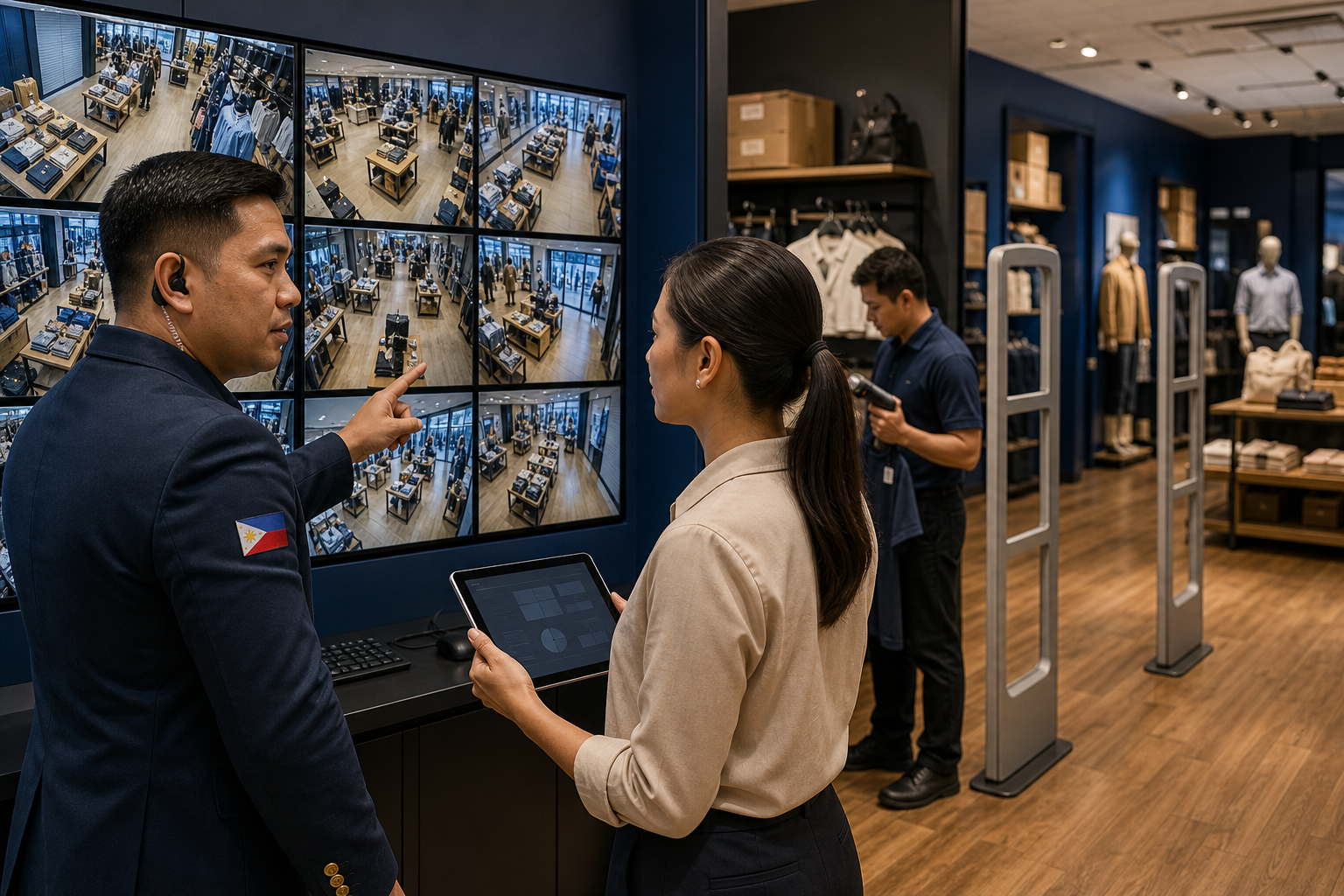
CCTV and video analytics. High-resolution cameras deter theft and provide evidence when incidents occur. Video management systems with search tools reduce investigation time. AI analytics can flag loitering, unusual customer paths, and suspicious hand-to-hand transfers, but deploy these tools carefully and comply with the Data Privacy Act and National Privacy Commission guidance.
Electronic article surveillance and RFID. Tags and gates reduce casual shoplifting. RFID scales well for high-volume operations because it speeds inventory counts and reduces human error. For small neighborhood stores, selective tagging on higher-risk SKUs can be cost-effective.
POS integration and analytics. Linking POS data to inventory systems enables exception-based alerts. Anomalies such as repeated price overrides or negative inventory after transactions should trigger immediate review.
Access control and asset tagging. Secure stockrooms and back offices with controlled access. Tag portable assets with GPS or Bluetooth trackers where practical. For vehicles used in distribution, install telematics to monitor routes and unauthorized stops.
Cloud-based loss prevention platforms. Use cloud systems to centralize reporting across multiple sites and enable remote audits. These platforms help regional managers spot patterns and allocate resources to stores with elevated risk.
People and culture: building an effective loss prevention team
A technology-centric approach fails without people who understand process and motive. Build a loss prevention culture that balances enforcement with fairness.
Define roles and escalation paths. Designate store-level loss prevention leads, a regional investigator, and an executive sponsor. Clarify who handles incident verification, who liaises with law enforcement, and who coordinates civil recovery.
Hire and screen carefully. Background checks, reference verification, and short probation periods reduce the risk of internal theft. For certain roles, periodic re-screening makes sense, especially after promotions or changes in responsibilities.
Train for prevention and de-escalation. Train staff on cash controls, inventory procedures, how to approach suspected shoplifters safely, and how to document incidents. Emphasize de-escalation and customer calm. Filipino shoppers appreciate respectful handling, and rude confrontations can escalate into reputational damage.
Incentive alignment. Avoid incentives that encourage risky behavior, such as commission on voids or high-volume returns. Instead, reward teams for shrink reduction, accurate inventory, and secure cash handling.
Incident response and legal considerations in the Philippines
How you respond to theft or loss affects recoverability and legal exposure. A clear, standardized workflow speeds investigations and preserves evidence.
Detect, verify, contain. Use CCTV footage and witness statements to verify incidents quickly. If a suspected shoplifter is present, engage staff trained in safe intervention. For employee incidents, restrict access to affected systems and secure physical assets for review.
Document and preserve evidence. Save video clips with timestamps, collect receipts, preserve point-of-sale logs, and record witness statements. Keep a chain-of-custody log for physical evidence. These steps support both internal discipline and any criminal or civil case.
Coordinate with local authorities and barangay officials. File a police report for criminal theft when appropriate and provide documentation to support prosecution. Barangay mediation is common for low-value disputes; prepare clear documentation to support recovery or mediation requests.
Understand legal limits and privacy rules. The Data Privacy Act requires careful handling of personal data, including video that identifies individuals. Consult legal counsel for actions that involve surveillance evidence, arrests, or public disclosure. Also understand criminal law basics for theft and robbery so that store policies align with admissible procedures.
Practical example: responding to a repeat shoplifting pattern in a mall store
A mid-sized apparel store notices increasing losses of high-value sunglasses. The store manager reviews CCTV, identifies two individuals that appear multiple times, and flags transactions with large-value returns. The loss prevention lead secures clips, consolidates return receipts, and escalates to regional loss prevention. Staff receive a temporary instruction to tag sunglasses and place them behind the counter. The team files a police complaint with documented evidence, improves tagging, and the store sees a rapid drop in losses. This sequence shows detection, containment, documentation, escalation, and prevention in action.
Measuring success and calculating ROI for loss prevention investments
Track a small number of meaningful metrics and align them to financial outcomes. Shrink percentage is the headline metric, but measures such as case rate, recovery rate, and average loss per incident add nuance.
Set realistic targets. Many modern retailers aim for shrink rates under 1.5 to 2 percent, depending on sector. Use historical data to set a baseline and apply phased targets as you roll out controls.
A simple ROI example. Suppose a store has annual sales of 50 million PHP and a shrink rate of 2 percent, equating to a loss of 1 million PHP. By implementing targeted controls that reduce shrink by 0.5 percent, the store would recover 250,000 PHP annually. If the new measures cost 200,000 PHP in the first year and 50,000 PHP thereafter, payback occurs in the first year. Customize this arithmetic for your portfolio to prioritize investments with the fastest returns.
A practical implementation checklist for Philippine retailers
Begin with a risk assessment and use it to prioritize actions. A phased program reduces disruption and shows quick wins.
Start by mapping risk by store, SKU, and shift. Implement immediate low-cost controls like cashier training, POS rule changes, and improved sightlines. Add medium-term measures such as CCTV upgrades and exception reporting. Plan longer-term investments like RFID and advanced analytics where scale justifies cost. Ensure legal and data privacy compliance at each step. Finally, measure and refine with monthly reviews and quarterly audits.
Final thoughts on sustainable loss prevention for the Philippines
Loss prevention Philippines is not about heavy-handed security or uncomfortable customer experiences. It is a business discipline that combines smart store design, disciplined processes, targeted technology, and a people-first culture. By focusing on repeatable procedures, clear evidence handling, and measurable outcomes, retailers and asset managers can convert the hidden cost of shrink into predictable profit, improved operations, and stronger customer trust. Implement steadily, measure pragmatically, and adapt to local conditions to keep losses manageable and resources focused on growth.