
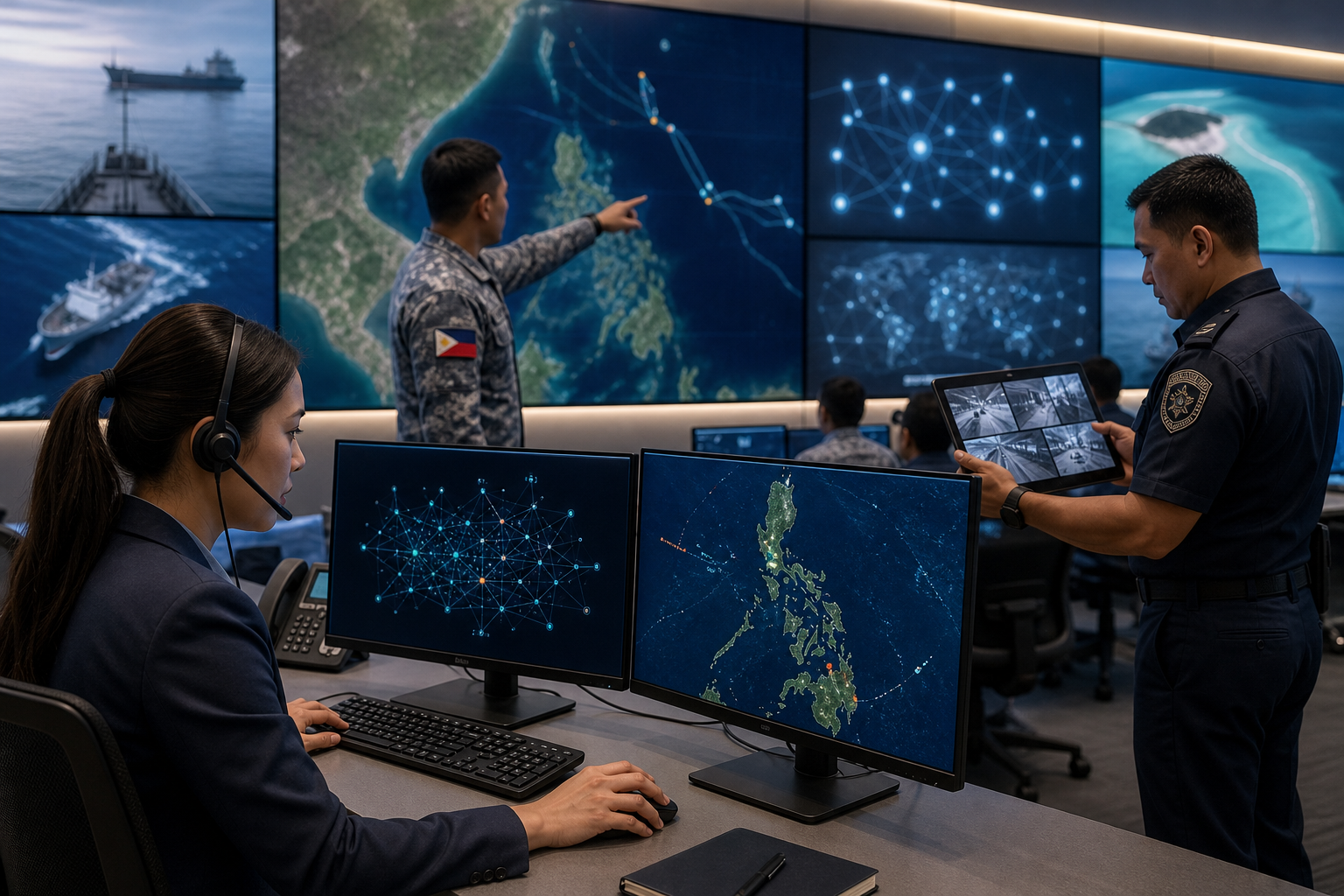
The Philippines faces a complex security environment where threats come from land, sea, air, cyberspace, and the information space. That complexity means no single agency can secure the state alone. This guide explains who does what, what the major threats look like, how agencies coordinate, and practical steps government and local leaders can take to reduce risk and respond faster when incidents happen.
Why government security matters in the Philippines
Security shapes daily life and national resilience. It affects economic investment, public trust, delivery of services, and the safety of communities. For government leaders and managers, understanding the architecture of security, the legal tools available, and realistic capability gaps helps turn policy into effective action. For professionals and informed citizens, clarity about roles reduces confusion during crises and improves oversight.
Government security Philippines: Key agencies and responsibilities
Department of National Defense and the Armed Forces of the Philippines The Department of National Defense sets broad defense policy and oversees the Armed Forces of the Philippines. The AFP operates the army, navy, air force, and specialized units. Their core missions include territorial defense, counterinsurgency, maritime domain awareness, and providing support during disasters. The AFP also develops capabilities for cyber operations and intelligence collection.
Philippine National Police and the Department of the Interior and Local Government The Philippine National Police handles internal law enforcement, public order, and criminal investigations. The PNP works closely with the Department of the Interior and Local Government, which coordinates with local government units. Local police are the first responders to most security incidents, so their training, equipment, and community ties are central to day-to-day public safety.
National Intelligence Coordinating Agency and the National Security Council NICA coordinates intelligence collection and analysis across agencies. The National Security Council advises the president and helps integrate policy responses across defense, law enforcement, diplomacy, and economic agencies. Both bodies play a central role in threat assessment and in triggering interagency action when national security matters escalate.
Anti-Terrorism Council and the Office of the President Following recent legislation, the Anti-Terrorism Council oversees government counterterrorism strategy and can designate individuals or groups as terrorists. The Office of the President retains executive authority to direct national responses to severe threats, including mobilizing military or police resources and coordinating international support.
Department of Information and Communications Technology, National Privacy Commission, and cyber units Cybersecurity now sits at the heart of government security. The Department of Information and Communications Technology leads policy and operates CERT-PH, the national incident response team. The National Privacy Commission enforces the Data Privacy Act and sets standards for protecting citizens data. Law enforcement units such as the NBI cybercrime division and PNP cyber groups investigate online offenses and support prosecutions. The AFP and DND have also stood up cyber defense units focused on military networks and critical infrastructure protection.
Philippine Coast Guard, Navy, and maritime agencies Maritime security involves the Philippine Coast Guard, the Navy, fisheries agencies, and customs. The Coast Guard leads search and rescue, maritime law enforcement, and port security. The Navy handles maritime defense and deterrence. These agencies coordinate when foreign vessels enter disputed waters, when smuggling networks operate, or when territorial incidents occur.
Customs, Bureau of Immigration, and specialized regulatory agencies Border control and economic security rely on agencies such as Customs and the Bureau of Immigration. Their work includes stopping illicit goods, preventing human trafficking, and securing supply chains. Regulatory bodies for energy, transport, and telecommunications also play a role in protecting critical infrastructure.
Major threats to government security in the Philippines
Insurgency and terrorism Armed insurgencies remain active in several regions. Communist-led insurgents and Islamist groups in the south have carried out attacks, kidnappings, and extortion that destabilize communities and create humanitarian stress. Episodes such as the siege in Marawi provide a clear example of how urban terrorism and insurgency can rapidly escalate, requiring coordinated military, police, and civilian responses.
Maritime and territorial challenges Territorial disputes in the South China Sea influence national security planning. Encounters with foreign vessels, harassment of Filipino fishermen, and the need for maritime domain awareness increase demand for patrol assets and diplomatic responses. Resource constraints mean that the government must prioritize critical areas while seeking international cooperation and maritime surveillance technology.
Transnational crime and smuggling Drug trafficking, human trafficking, and smuggling networks exploit porous maritime borders and gaps in enforcement. These networks erode rule of law and fund violent groups. Corruption and weak enforcement at some ports can amplify the problem.
Cyber threats and information operations Government networks, utilities, and private-sector systems face malware, ransomware, phishing, and intrusion campaigns. Cyberattacks can disrupt services, steal sensitive data, and undermine public confidence. At the same time, disinformation campaigns on social media can inflame ethnic or religious tensions, influence public opinion during elections, and complicate crisis communication.
Natural hazards and the security implications of disasters Typhoons, earthquakes, and volcanic activity cause large-scale displacement, infrastructure damage, and spikes in demand for humanitarian assistance. Disaster response becomes a security operation when law enforcement, medical teams, and logistics providers must operate under threat conditions or when criminal elements exploit chaos.
Insider threats and corruption Internal vulnerabilities, including employee misconduct, inadequate vetting, and corrupt practices, weaken the state from within. Insider threats can facilitate illicit transactions, leak classified information, or sabotage critical systems.
How agencies coordinate and where gaps persist
Coordination mechanisms exist, but challenges remain. Interagency councils and joint task forces align policy and operations during crises, yet on-the-ground coordination often falters due to differences in training, technology, and command relationships. Information sharing can be slow when agencies use incompatible systems or fear legal exposure. Capacity imbalances are visible between national headquarters and provincial units, especially in cyber and maritime domains where assets are expensive and scarce.
Legal frameworks create necessary authority but also create friction. Anti-terrorism and surveillance powers increase operational reach, but they also require safeguards to protect civil liberties. Courts, legislators, and civil society often demand transparency and accountability, fuelling tension at critical moments.
Practical steps to strengthen government security in the Philippines
Build interoperable communications and data sharing Effective response depends on timely information. Invest in secure, interoperable communication systems that connect national, regional, and local actors. Standardize data formats and access protocols so intelligence, law enforcement, and emergency management can share situational awareness without risking privacy law violations.
Prioritize community-based security and local capacity Local police and barangay officials are often the first to notice radicalization, trafficking, or smuggling. Strengthen community policing, increase training in human rights and incident reporting, and fund local disaster preparedness. Community trust reduces escalation and generates actionable intelligence.
Harden critical infrastructure and modernize cyber defenses Treat power grids, water systems, transport networks, and hospital systems as national security assets. Implement basic cyber hygiene across all government agencies, require multi-factor authentication, patch management, and segmented networks. Conduct regular vulnerability assessments, tabletop exercises, and red team drills with realistic scenarios.
Improve maritime domain awareness and presence Combine low-cost sensors, maritime patrol aircraft, and cooperative data sharing with the private sector and neighboring countries. Strengthen the Coast Guard presence in key fishing areas and ports, and improve coordination with the Navy for escalatory scenarios.
Streamline legal processes while protecting rights Clear, predictable legal frameworks help security agencies operate while conserving public trust. Improve procedures for warrants, surveillance oversight, and detention review. Increase transparency about counterterrorism operations without compromising tactical security.
Invest in personnel, not only hardware Modern threats require skilled analysts, cyber specialists, and community engagement officers. Offer competitive career tracks, continuous training, and ethical education to reduce insider risk and retention problems. Decentralize some capabilities to regional centers so remote areas receive faster support.
Forge public-private partnerships for resilience Private companies run many assets that matter for national security. Create formal cooperation agreements for incident reporting, cyber threat sharing, and joint continuity planning. Encourage critical infrastructure operators to adopt national standards and engage in regular exercises with government responders.
Strengthen international cooperation where necessary Visitations, joint exercises, and intelligence-sharing agreements boost capabilities beyond what procurement alone can provide. The Philippines benefits from partnerships for maritime patrols, counterterrorism training, and cyber defense assistance. Keep diplomatic channels open so incidents at sea or across borders do not escalate.
Scenarios that show how coordination works
A ransomware attack on a provincial hospital When a provincial hospital reports encrypted systems, the local IT team first isolates affected machines and notifies the provincial disaster office. The DICT CERT-PH and the PNP cybercrime unit provide technical guidance and forensic support. If patient care is at risk, the Department of Health coordinates patient transfers. Transparent public communication limits panic, while quick containment prevents spread to other hospitals on the same network.
A maritime incursion near a fishing community Fishermen report a foreign vessel shadowing their boats. The Coast Guard responds first with patrols and documents actions for legal elevation. The Navy provides backup if the situation escalates. The Department of Foreign Affairs files a diplomatic protest while local officials coordinate evacuation or aid for affected communities. Rapid, multiagency response protects lives and collects evidence for the international arena.
Urban terrorist attack and community response In case of an attack inside a city, local police secure the perimeter and evacuate civilians. The PNP's special action units and the AFP coordinate under a unified command. Emergency medical services, hospitals, and civilian crisis centers manage casualties. Social media monitoring and counter-messaging contain misinformation while the Anti-Terrorism Council initiates broader investigative steps.
Measuring progress and accountability
Meaningful security improvement requires metrics that capture readiness, response speed, resilience, and respect for rights. Track indicators such as emergency response times, cyber incident resolution rates, vaccination of critical systems, number of joint exercises, and independent audits of detention and surveillance practices. Regular after-action reviews and public reporting foster trust and continuous improvement.
Final thoughts
Government security in the Philippines involves a wide cast of agencies, a complex set of threats, and the need for practical coordination. Strengthening resilience requires investment in people, systems, and trust. By improving communication, equipping local responders, modernizing cyber defenses, and maintaining transparent legal safeguards, the Philippines can reduce risks and respond more effectively when incidents occur. The challenge is ongoing, but targeted reforms and consistent practice can yield measurable improvements in safety and national resilience.