
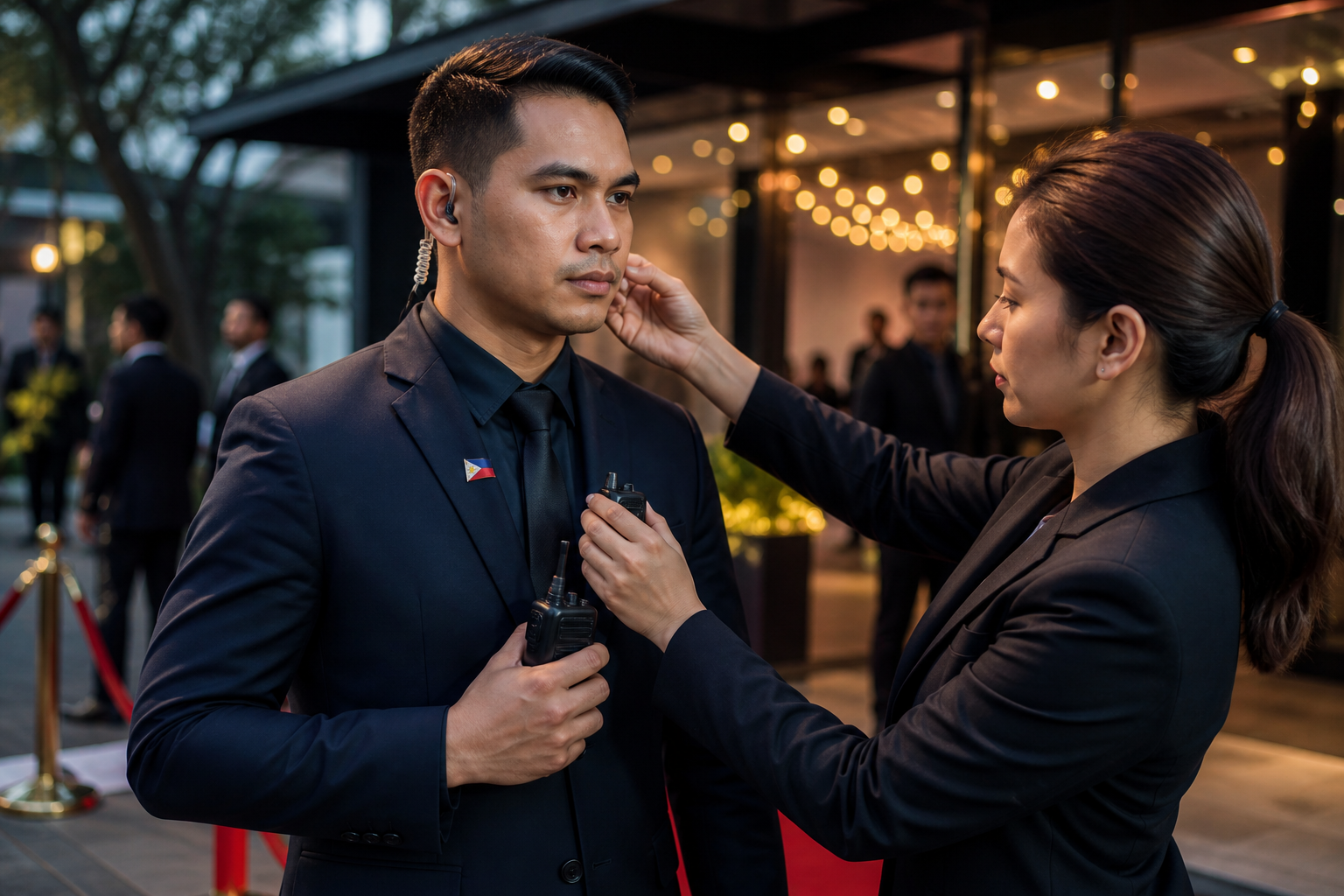
Crowd control failures, poorly trained guards, or unclear responsibilities can turn a successful event into a legal and reputational nightmare. For any organizer in the Philippines, hiring the right security team changes the event from a potential risk into a predictable, controlled operation. Event security Philippines requires more than booking personnel; it demands careful planning, verification, and clear contracting.
Why event security matters in the Philippines
Events in the Philippines range from small corporate briefings and weddings to open-air concerts and festivals that draw tens of thousands. Each setting brings specific risks: theft, crowd surges, unruly behavior, VIP threats, or emergency evacuations after a fire or storm. Local factors matter as well. Urban venues face different challenges than open plazas or provincial fiesta grounds. Traffic, local ordinances, and the proximity of medical or police services affect how you set up security.
Good security reduces liability, protects guests and staff, preserves assets, and keeps the event on schedule. It also reassures stakeholders, sponsors, and attendees that the organizer takes safety seriously. The right security partner blends trained personnel, clear procedures, and the ability to coordinate with local authorities when necessary.
Assess your event’s security needs before you hire
Start with a realistic risk assessment. Ask what could go wrong and how likely each scenario is. Consider venue characteristics: enclosed versus open space, number of exits, lighting, parking areas, access points and nearby public transport. Consider the audience profile, ticketing method, and whether alcohol will be served. High-energy concerts and sporting events need different crowd management than a seated corporate luncheon.
Scale your security plan to the event size and risk. A small private gathering may need only visible uniformed guards to deter theft and assist guests. A mid-size product launch might require access control, bag checks, and crowd marshals. Large festivals will need perimeter security, backstage protection, medical triage points, rapid incident response teams, and traffic marshaling.
Create a staffing plan that covers these roles: entry screening and ticket validation, internal floor or site patrols, stage and VIP protection, parking and traffic management, emergency response liaison, and a supervisory command post. This plan will determine the number and experience level of guards you hire.
How to evaluate and hire a reliable guard company
Not all security companies are equal. Evaluate potential vendors methodically, focusing on credentials, experience, training, and operational approach.
Verify legal registration and accreditation Make sure the company is legally registered and authorized to provide security services. Ask for copies of government registration, business permits, and proof of registration with the relevant supervisory authority that oversees private security in the Philippines. Confirm that individual guards hold the necessary personal IDs, certifications, and permits required by law for their duties, especially if firearms or crowd-control equipment is involved.
Confirm training and competence Training matters more than appearance. Request the company’s training curriculum for guards assigned to events. Guards should demonstrate competence in crowd management, conflict de-escalation, first aid and CPR, radio communications, and incident reporting. For higher-risk assignments, ensure staff have experience handling large crowds, emergency evacuations, or VIP protection.
Check experience and references Ask for references from similar events the company has secured. A vendor who has worked festivals, conventions, or concerts will understand different logistical needs compared with one that primarily provides static site guards. Call references and ask about responsiveness, problem-solving during incidents, punctuality, and how the vendor handled coordination with local police or medical teams.
Assess operational capacity and supervision A reliable company provides on-site supervisors, a clear chain of command, and contingency plans for replacing staff who cannot work. Confirm how the company manages shift handovers, fatigue, and overtime. Ask whether they provide radios, metal detectors, barrier systems, or CCTV operators, and whether those costs are included.
Ask the right questions during vendor interviews
- Are you accredited with the relevant government supervisory office, and can you provide documentation?
- What certifications, training, and licenses do your guards hold?
- Can you provide references for events similar in size and type to ours?
- How many guards will you assign, and what is the supervisory structure?
- What equipment and communication tools will be used on site?
- How do you handle incidents, reporting, and coordination with local emergency services?
Contract essentials: what to include and why it matters
A clear contract protects both parties and reduces confusion on the day of the event. The following clauses deserve explicit attention.
Scope of work and deliverables. Define exact duties, guard positions, number of personnel, hours, and expected tasks. If gate screening, bag checks, or VIP escorts are required, specify them.
Performance standards and replacements. State response times for incidents, supervisor availability, and how the vendor will handle absent guards or last-minute staffing changes.
Insurance and liability. Verify the vendor carries public liability insurance and workers compensation. The contract should allocate responsibility for negligence or failure to perform.
Background checks and vetting. Require that guards undergo background checks and have clean records appropriate to their assignment level.
Equipment and uniform standards. Specify whether the company will supply radios, metal detectors, reflective vests, or other gear. Stipulate uniform appearance and identification badges.
Incident reporting and documentation. Require immediate notification of incidents, followed by a written incident report within a specified timeframe. Define who will receive reports and how they will be stored.
Payment, overtime, and additional charges. Agree on base rates, overtime multipliers, and charges for last-minute requests or extended hours.
Termination and dispute resolution. Include terms for early termination, notice periods, and how disputes will be mediated or arbitrated.
Pricing and budgeting for event security
Cost depends on guard numbers, seniority, whether they are armed, the hours required, and special equipment or services. Expect higher rates for supervisors, K9 units, or guards with specialized training. Large events often require security planning fees and site visits charged separately.
Budget realistically. Low bids may look attractive but can indicate inadequate staffing, inexperienced guards, or missing insurance. Factor in contingency for overtime, additional staff after sales spikes, and third-party services like rented barriers or extra lighting.
Day-of-event operations: practical tips to ensure smooth execution
Run a pre-event security briefing. Bring the security team, venue managers, event producers, and any local authority representatives together to walk the plan. Review entry procedures, emergency exits, medical points, VIP movement, and communication protocols. Clarify escalation steps for different incident types.
Establish a command post. This should be a clearly marked location with maps, radio charging, phone numbers, and staffing rosters. The command post coordinates all security actions, logs incidents, and acts as the liaison with police or emergency medical teams.
Practice communication discipline. Use clear radio channels and a simple code system for common scenarios. Limit radio chatter to essential messages to keep channels clear during incidents.
Stage practical checks. Before doors open, verify that all perimeter fencing and barriers are secure, lighting is functional, and CCTV cameras cover critical areas, if provided. Test metal detectors and ticket scanning equipment as part of a quick dry run.
Plan for medical and arrest procedures. Coordinate with local medical teams and police. Identify a secure holding area for persistent troublemakers, ensure a civilian witness is present during any restraint, and document incidents thoroughly to protect against later claims.
After-action review. After the event, conduct a debrief with security staff and stakeholders to review what worked and what did not. Document lessons learned to improve future events.
Common hiring mistakes and how to avoid them
Relying on low price alone. Cheap bids often hide shortcuts. Verify what the quote includes.
Skipping references or site visits. Never accept a vendor without checking references or seeing guards in action at another event.
Assuming uniformed presence equals competence. Visible uniforms deter misbehavior, but competence comes from training and supervision.
Neglecting coordination with local authorities. Local police, barangay offices, or health services can be crucial partners. Early communication avoids confusion during incidents.
Failing to plan for contingency. Weather, power outages, or transport strikes are common risks in the Philippines. Build contingencies into staffing and scheduling.
Examples: matching security solutions to event types
A corporate product launch with 300 attendees in a hotel ballroom requires a visible entrance team to check credentials, two internal patrolling guards to assist with crowd flow and a supervisor to coordinate with venue security. Emphasize guest assistance and a discreet presence rather than a heavy-handed approach.
A mid-size music showcase at a mall atrium needs controlled entry, bag checks, a backstage security team for performers, and parking marshals. Expect higher demand for crowd flow management and a dedicated liaison to the mall security team.
A large outdoor festival requires perimeter fencing, multiple entry screening points, a dedicated emergency medical team, traffic marshals, and robust communication between security, police, and event organizers. Kitted response teams should be placed at strategic locations to respond quickly to disturbances.
Local coordination and cultural considerations
Working with barangay officials and the local police can smooth logistics and permit processing. For events in provincial areas or during local fiestas, engage community leaders early, since local practices and crowd behavior can differ widely. Respect community norms when planning perimeter controls or amplified sound policies.
For VIPs or politicians, additional protocols are necessary. Coordinate routing, timing, and access control with the organizer, the guest’s security detail, and local authorities to avoid duplication or gaps.
Final checklist before you sign and on event day
Before signing, confirm: legal registration and insurance documents, detailed staffing plan, contract clauses for replacements and incident reporting, references for similar events, and clarity on equipment and costs. On event day, verify guard IDs, run a pre-event briefing, confirm radio channels, and ensure the command post is operational.
A short checklist helps: confirm permits and registrations, validate guard certifications, finalize staffing and supervisor names, test communications, confirm medical coverage, and run a site walk-through with the lead security supervisor.
Hiring reliable event security in the Philippines is a matter of careful selection, clear contracting, and detailed planning. By assessing risk, verifying credentials and training, and insisting on robust day-of coordination, you turn safety from an afterthought into an operational strength. Treat your security partner as part of the event team, and you will not only reduce risk, you will improve the guest experience and protect the investment you have made in the event.