
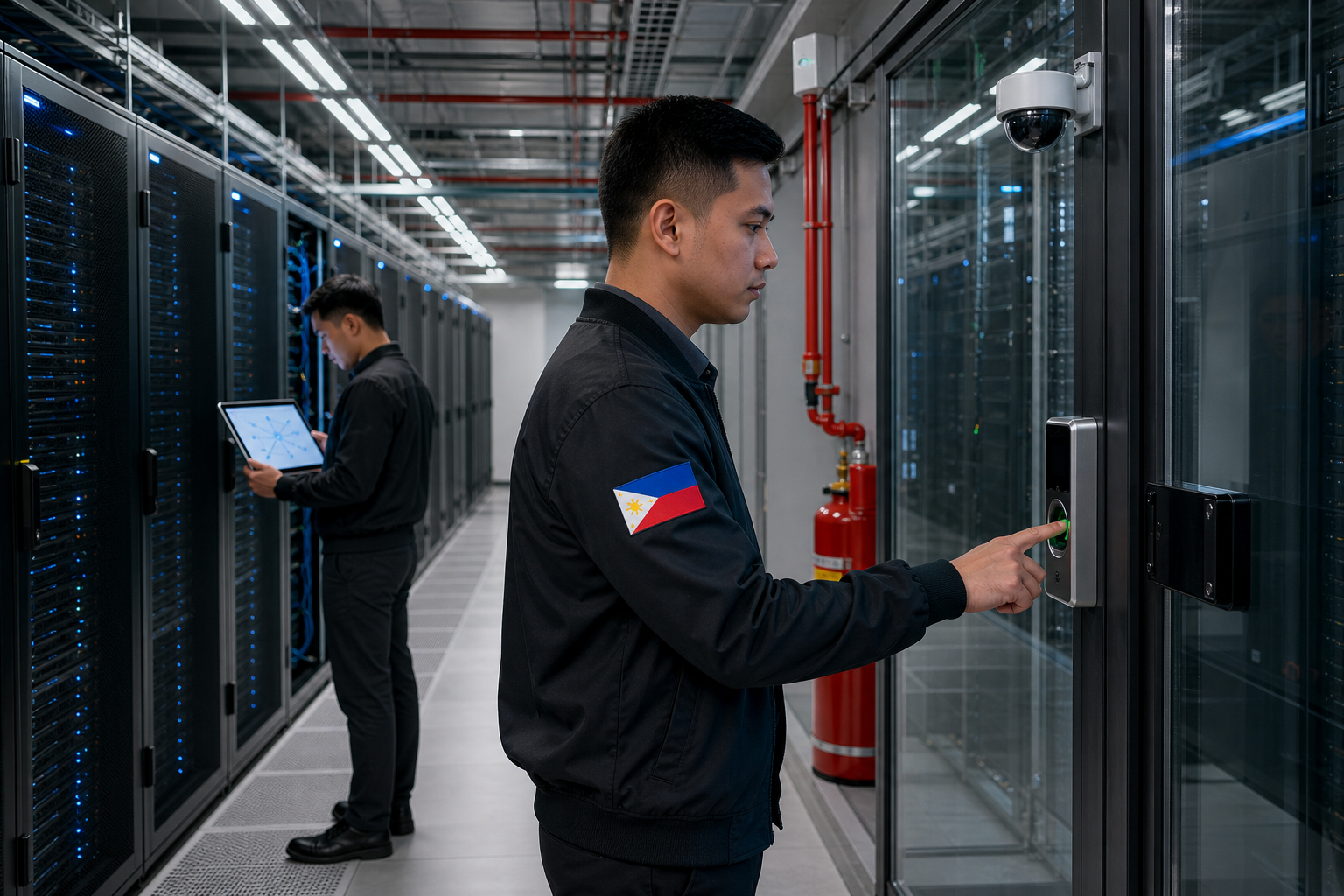
Most organizations that rely on cloud services, colocation, or on-premise servers treat the data center as a black box. That approach works until a storm, grid outage, regulatory audit, or security incident exposes gaps you did not expect. Data center security Philippines has particular demands, because the country mixes rapid digital growth with distinct environmental and regulatory risks. Understanding the applicable standards, the practical defenses that matter, and the steps to verify a provider will keep your data safe and your operations resilient.
Why this matters now: the Philippines is expanding its data center capacity quickly, connectivity improves across regions, and companies increasingly store regulated personal data on local or regional infrastructure. Those trends make informed decisions about physical protection, technical controls, and compliance essential for every IT leader and security practitioner operating here.
Data center security Philippines: the regulatory and standards landscape When you evaluate data center security Philippines, you should look at both international standards and local laws. International standards set the technical and operational bar. Local regulation sets the legal obligations and enforcement expectations.
ISO 27001 remains the most widely adopted framework for information security management. Certification shows that an operator follows structured processes for risk assessment, controls, and continual improvement. For physical and site infrastructure, TIA-942 and Uptime Institute Tier classifications help you evaluate availability and build quality, though not every operator will hold formal certification. For service providers, SOC 2 reports demonstrate control effectiveness around security, availability, processing integrity, confidentiality, and privacy.
Specific technical standards can also apply. PCI DSS governs cardholder data environments and imposes strict controls on networks, logging, and physical access. IEC 62443 covers industrial control system security, and elements of ISO 22301 address business continuity planning. These frameworks are complementary, not mutually exclusive.
At the local level, the Data Privacy Act of 2012, implemented and enforced by the National Privacy Commission, governs processing of personal data. It requires data controllers to implement reasonable and appropriate organizational, physical, and technical safeguards. The Department of Information and Communications Technology issues policies and advisories that affect infrastructure planning and cybersecurity practices. When a data center operator hosts personal or regulated data, contractual obligations should reflect the Data Privacy Act and any sector-specific rules.
Physical security fundamentals for Philippine data centers Physical protection forms the first line of defense. A secure facility starts with site selection and extends to daily operations.
Site selection should account for local hazards. Flood plains, proximity to fault lines, and storm exposure matter more in the Philippines than in many other markets. Elevation above flood risk, robust drainage, and structural design for seismic resistance reduce the chance of prolonged downtime.
Perimeter security should combine visible deterrents with controlled access. Fencing, vehicle barriers, and a guarded entry gate create layers that slow and screen intruders. Inside, a visitor processing point, biometric access systems, and mantrap vestibules limit movement to authorized zones. Cameras and continuous monitoring ensure that access records can be audited after an incident.
Protect sensitive spaces such as server halls, battery rooms, and generator plant areas with segmented access policies. Physical separation between administrative offices and critical infrastructure limits accidental exposure. Secure loading bays and separated delivery routes prevent unvetted personnel from reaching critical areas during maintenance or deliveries.
Fire detection and suppression strategies must suit the equipment environment. Early smoke detection, aspirating systems, and clean-agent suppression protect electronics while minimizing collateral damage. Fuel storage for standby generators requires secure containment, secondary bunding, and fire-rated separation from the core facility.
Technical security best practices that matter A data center is secure only when the network and host controls match the level of physical protection. Focus on layered controls that protect confidentiality, integrity, and availability.
Start with network architecture that isolates customer and management traffic. Segmentation and microsegmentation reduce lateral movement if an attacker gains a foothold. Restrict management interfaces to hardened jump hosts with multifactor authentication and strict logging.
Deploy perimeter and internal firewalls, intrusion detection, and intrusion prevention systems. A modern security operations center or an outsourced managed detection service should collect logs from network devices, hypervisors, and critical applications, and then analyze them with a SIEM. Continuous monitoring detects anomalous behavior quickly.
Encryption both at rest and in transit removes much of the risk from stolen storage or intercepted traffic. Proper key management, ideally with hardware security modules or reputable cloud KMS offerings, keeps encryption effective. Mandate MFA for all administrative access, including for the data center operator staff who manage infrastructure on behalf of customers.
Patch management and configuration control reduce vulnerability exposure. Maintain an auditable change control process that schedules patch windows, records approvals, and includes rollback plans. Regular vulnerability scanning, external penetration tests, and red team exercises validate technical controls and remind teams how to respond under pressure.
Operational and organizational measures that reduce human risk People and processes make or break security. The best physical and technical controls cannot substitute for sound operational governance.
Start with staffing practices: background checks, role-based separation of duties, and minimal access for contractors. Regular training on security policies, phishing awareness, and incident reporting ensures staff recognize and escalate issues. Define clear escalation paths and maintain up-to-date contact lists for critical personnel.
Incident response must be more than a document. Conduct tabletop exercises and full failure rehearsals periodically. Test your communication plans, decision authority, and recovery scripts. Ensure that logs and immutable backups are available to support investigations and forensic needs.
Supplier risk management is essential because many data centers rely on third-party maintenance, fuel suppliers, and network carriers. Maintain written contracts that specify security requirements, change notifications, audit rights, and termination support. Require service providers to provide relevant audit reports and to notify you promptly of any incidents that could affect your data.
Resilience planning for Philippine hazards and grid realities The Philippines presents specific risks that deserve focused planning: typhoons, flooding, seismic activity, and occasional instability in utility supply. Design and operational practices should anticipate those conditions.
Power architecture should avoid single points of failure. Redundant feeds, on-site UPS and generator capacity, and adequate fuel storage keep operations running through grid outages. Operators should test generator start times and practice load transfers frequently. For long outages, fuel agreements with multiple suppliers and secure fuel storage permits sustained operation.
Cooling systems must handle high humidity and possible equipment ingress from water. Raised floors, contained hot and cold aisles, and environmental monitoring for humidity and particulate matter prevent thermal stress. Water detection in critical spaces and secure drainage channels reduce the impact of leaks or floods.
Geographic redundancy mitigates localized disasters. If your workload is critical, evaluate data center pairs in different regions or islands with diverse power grids and network paths. For regulated workloads, ensure that data residency requirements align with your DR strategy.
Scenario: a five-step response to a category 4 typhoon causing grid failure
- Confirm facility status: physical inspection teams verify perimeter integrity and any water ingress, then report to the incident commander.
- Engage backup systems: automatic transfer switches bring generators and UPS online; load-shedding prioritizes critical systems.
- Activate communication plan: notify customers, regulators, and internal stakeholders within prescribed windows, using multiple contact methods.
- Monitor and escalate: SOC and facilities teams track environmental and power metrics, escalating anomalies to maintenance contractors.
- Recover and document: when normal power returns, execute controlled restorations and compile an after-action report that includes lessons learned.
Choosing a provider or deciding to build: due diligence and decision points Many organizations evaluate whether to colocate with a provider or build their own facility. The right choice depends on control needs, scale, and risk appetite.
When evaluating providers, visit the site. Photos and sales decks cannot replace an in-person tour. Review certification evidence, including ISO 27001, SOC 2 reports, and any Tier or TIA-942 assessments. Ask for recent audit results and how the operator handled past incidents.
Examine contractual terms carefully. Service level agreements must define availability, breach notification timelines, customer responsibilities, and limitations. Confirm data ownership clauses, exit assistance, and secure data deletion procedures at contract termination.
Validate operational practices. How often do they test generators and UPS? What is the average time to replace failed drives or servers? How do they vet contractors and manage background checks? Ask for examples of their disaster recovery drills and customer references that can attest to responsiveness.
If you decide to build, invest in experienced data center architects and independent reviewers. Design for local hazards, choose micro-modular approaches where possible, and plan staffing for 24x7 operations from day one.
Practical checklist and priority next steps for organizations in the Philippines Start with a concise security roadmap that acknowledges both legal obligations and operational realities.
First, classify your data by sensitivity, then map where that data resides and how it flows. That simple step will clarify which workloads need the highest levels of physical and technical protection.
Second, verify provider credentials and request audit artifacts. Confirm the facility meets your availability and compliance needs, and that contract terms align with your retention and exit requirements.
Third, enforce strong access controls and encryption for all critical systems. Require multifactor authentication, role-based access, and robust key management.
Fourth, test recovery plans. Conduct at least one full DR exercise per year and smaller tabletop tests every quarter. Use the results to adjust SLAs, staffing, and agreements with carriers and fuel suppliers.
Finally, maintain continuous monitoring and routine assessments. Schedule vulnerability scans monthly, patch cycles that balance stability with risk mitigation, and penetration tests at least annually for critical environments.
Short closing thought Data center security Philippines combines global best practices with local awareness. Treat the facility as part of your security architecture, not just a utility. By blending recognized standards, rigorous physical and technical controls, operational discipline, and resilience planning for local hazards, you will reduce risk and ensure that your data remains available and protected when incidents occur.