
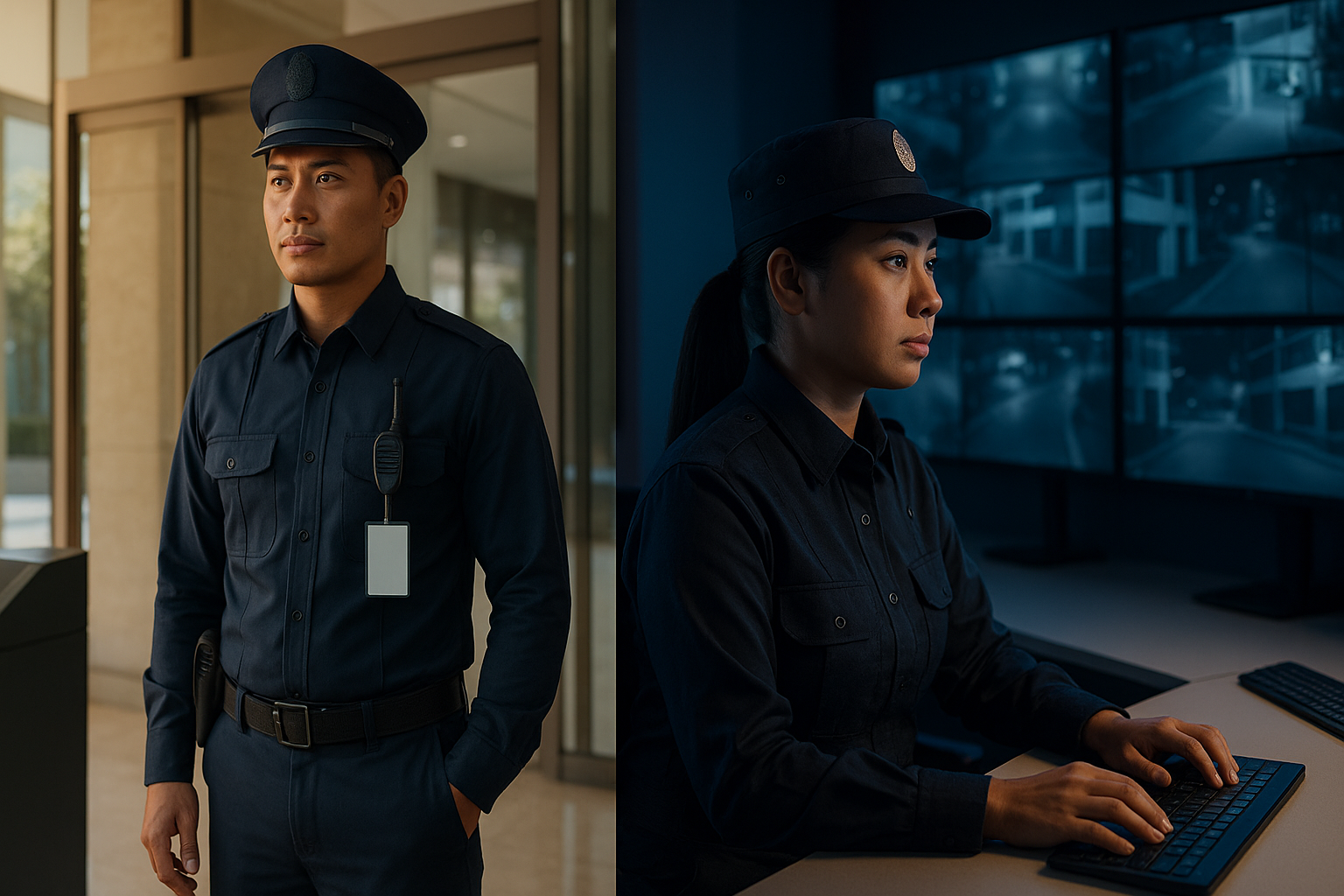
A break-in, a fire, or a late-night disturbance can escalate in minutes. When those minutes count, having dependable protection on site every hour of every day is not optional. For businesses and communities across the Philippines, reliable 24/7 guard services provide continuity, deterrence, and immediate response when incidents occur.
This article explains what 24 hour security Philippines really means, how to evaluate and hire a trustworthy provider, deployment patterns that work for common property types, and practical ways to manage performance and cost. If you are responsible for protecting assets, people, or operations, this guide will help you make decisions that reduce risk and give you reliable coverage around the clock.
What 24 hour security Philippines means today Security guarding used to be just a uniformed presence. Now 24 hour security in the Philippines usually combines trained guards with technology and clear response procedures. A modern 24/7 program will provide continuous human presence during high-risk hours, mobile patrols to cover larger areas, and a documented handover between shifts so nothing falls through the cracks.
Guards may perform access control, visitor screening, gate operations, CCTV monitoring, routine patrols, and emergency response. Some sites require armed personnel, while many rely on unarmed guards who focus on observation, reporting, and coordination with local authorities. Additional services often include alarm response, escort duties, crowd control for events, and vehicle inspections at perimeter points.
Expect an operational structure that includes shift supervisors, a guard roster with rotation policies, an incident reporting system, and lines of communication for escalation to management or law enforcement. Reliable providers also maintain insurance coverage and industry-standard training for their personnel.
How to choose a reliable 24/7 guard service Selecting a security company requires more than comparing price tags. Poor selection creates operational gaps, increases liability, and undermines safety. Assess providers against these practical criteria.
Licensing and compliance Confirm the agency holds the required licenses to operate in the Philippines and to deploy armed guards if needed. Licensed companies must comply with national rules on training, firearms, and payroll benefits. Ask to see official documentation and verify that their permits are current. Compliance protects you from fines and ensures guards meet minimum legal standards.
Training, certification, and skills Training matters. Basic guard training should include observation techniques, incident reporting, crowd management, and emergency procedures. For specialized sites, ask about training in access control systems, forklift safety in warehouses, or hospitality-oriented customer service for residential lobbies. Insist on refresher training schedules; guards who do the same routine for years without updates lose effectiveness.
Background checks and vetting Request documentation of background screening. Reliable firms run identity verification, criminal record checks, and employment references. Ask how they manage hiring in high-turnover situations and how quickly they can replace a guard who fails screening or underperforms.
Supervision and shift management A well-run 24 hour security Philippines provider will have clear supervisory layers. Shift supervisors should patrol, audit logs, and handle on-site issues. Ask for the ratio of supervisors to guards and how the company manages handovers between shifts. Handovers are a frequent source of failure if not formalized.
Technology, reporting, and transparency Look for GPS-tracked patrols, electronic logbooks, and a regularly updated incident management system. Providers should generate consistent daily reports and be willing to share raw logs on request. CCTV integration with guard functions enhances situational awareness. Choose a firm that demonstrates how technology improves accountability rather than using it as a sales cliché.
Insurance and liability Confirm the company carries liability insurance and workers compensation for its employees. Understand your own liability as the client and whether the provider will indemnify you for guard negligence. A clear contract will outline responsibility for damages, medical claims, and third-party losses.
References and track record Ask for client references in similar industries, and follow up. A firm that protects small subdivisions may not perform well at a heavy industrial site. Visit a current client site if possible to observe operations. Request incident statistics and average response times for alarm activations.
Pricing structure and contract terms Transparent pricing should show direct labor, benefits, overtime, uniform costs, equipment charges, and administrative fees. Beware of unrealistically low bids; they usually cut corners on training, benefits, or supervision. Contract terms should include notice periods, termination clauses, performance guarantees, and remedies for missed SLAs.
Red flags to watch for Pay attention to these warning signs: vague answers about licensing, reluctance to show training records, no formal incident reporting, high guard turnover without explanation, and refusal to provide client references. If a provider cannot demonstrate supervision and accountability, move on.
Deployment models that fit common Philippine sites Different properties require different 24 hour security Philippines models. Below are practical deployments and what they typically include.
Residential subdivisions and condo complexes Residential sites need a mix of gate control, patrols, and community engagement. A typical deployment pairs 24-hour gate staff with mobile patrols during low-activity hours, and additional foot patrols in areas with pedestrian traffic. Guards should handle visitor logs, coordinate with homeowners associations, and assist emergency services when necessary. Emphasis should be on consistent presence and friendly, professional conduct to maintain resident trust.
Retail stores and malls Retail environments need visible deterrence and quick incident handling. Guards at entrances, CCTV monitoring stations, and roving mall patrols work together to deter theft and manage crowd issues. During closing hours, additional patrols and CCTV sweeps prevent after-hours break-ins. For high-value outlets, consider plainclothes loss-prevention personnel coordinated with uniformed guards.
Warehouses and manufacturing plants Large properties require perimeter control, vehicle screening, and periodic internal checks. Night shifts typically prioritize external patrols and lock verification, while daytime guards also manage access control for incoming shipments. Specialized training in hazardous materials awareness and forklift zones reduces safety incidents.
Construction sites Construction sites attract theft of materials and equipment. Around-the-clock guard posts at access points, mobile vehicle checkpoints, and evening patrols of equipment storage areas reduce losses. Patrol routes should change irregularly to avoid predictable patterns. Close coordination with site managers ensures guards know when critical deliveries or subcontractor crews will be present.
Events and temporary needs For events, scale security to expected attendance and risk level. Security plans should include access control, bag checks, crowd flow management, and emergency evacuation procedures. Temporary 24/7 coverage for multi-day events requires clearly defined rest rotations and a base for the security team to report incidents and receive updates.
Managing performance and measuring results A good security contract is not a set-it-and-forget-it arrangement. It requires ongoing management and measurable benchmarks.
Key performance indicators Agree on KPIs such as response time to alarms, number of patrols per shift, incident closure rate, timeliness of reports, and training completion rates. Review these metrics monthly. Request examples of incident reports and require root cause analysis for recurring issues.
Communication and escalation Establish an escalation matrix that names contacts on both sides, expected response times for management-level issues, and procedures for urgent events after hours. Regular coordination meetings help maintain alignment and address emerging site risks.
Audit and quality assurance Conduct random audits, ride-alongs, and simulated incidents to test readiness. Technology tools like GPS trail audits and timestamped logbooks should confirm patrols and handovers. Use audits to identify training gaps and operational bottlenecks.
Retention and morale High guard turnover undermines continuity. Work with your provider to implement incentives for longer tenures, clear career paths, and recognition for good performance. Engaged, stable guards know the property, the people, and the routines, which improves safety.
Cost considerations and ways to optimize Round-the-clock security represents a significant cost, but careful planning reduces waste while keeping protection effective.
Understand cost drivers The main cost drivers are number of guards, whether guards are armed, location premiums for high-crime or congested areas, supervisory ratios, and technology add-ons. Benefits, mandatory government contributions, and overtime can add up quickly if not structured in the contract.
Use a blended approach Combine human guards with technology to reduce total hours of manned coverage without lowering security. For example, a CCTV monitoring station with rapid-response mobile patrols can replace static posts in low-traffic areas, while still providing fast intervention when needed.
Risk-based manning Adjust guard levels to mirror actual risk. High-traffic hours may need more personnel, while predictable low-activity periods can be covered by fewer guards plus patrols. Perform periodic risk assessments and align staffing to seasonal patterns, local events, and incident history.
Negotiate performance-based terms Instead of only paying for hours, negotiate small performance incentives or penalties tied to measurable outcomes like incident response times and report completeness. This aligns provider behavior with your security goals.
Questions to ask before you sign Before finalizing any contract, ask clear operational questions and require written answers. Useful items include expected response times to alarms, the process for replacing absent guards, how overtime is handled, proof of insurance, and whether guards carry radios or use mobile apps for reporting. Ask for a sample incident report and a current staffing roster.
Quick pre-hire checklist
- Verify company licenses and permits are current.
- Confirm guards undergo background checks and have documented training.
- Review sample contracts, SLAs, and pricing breakdowns.
- Observe operations at a current client site when possible.
- Confirm insurance coverage and liability terms.
- Agree on KPIs, reporting cadence, and escalation contacts.
Final thoughts Securing a property in the Philippines around the clock takes more than hiring warm bodies. It requires a structured provider with verified credentials, technology-backed accountability, clear contractual terms, and a partnership mindset that treats security as an operational discipline. Whether your priority is protecting residents, inventory, or employees, focus on providers that show consistent supervision, transparent reporting, and flexible deployment models that adapt to real risks. Reliable 24 hour security Philippines is about continuity, competence, and a clear plan for handling incidents when they occur.
Short conclusion A reliable 24/7 guard service reduces the chance that a single incident will become a crisis. Choose a provider that combines verified training, consistent supervision, and technology-backed reporting, and manage the relationship through clear KPIs and regular audits. With the right partner, round-the-clock protection becomes a dependable foundation for your operations and peace of mind.